
Maybe you never cared in the first place, and you can't quite believe the thing is still running. Or maybe you're an England fan who sat through Wednesday night and can't face watching a “third place” playoff, let alone a final. Either way, I'd like to offer you an alternative: 90 minutes in nature. No extra time (unless you want it), no penalties (as long as you park sensibly), and the full-time whistle blows whenever you say it does.
With the late kickoffs this week you could be tempted to write the evenings off altogether. Don't. July is a superb month for an evening adventure. Sunset is still well after 9pm, the air holds its warmth, and a surprising amount of our wildlife saves its best performances for exactly the hours the football has claimed. Here are five ways to spend it.
1. Otter trekking

Rivers are at their best in the evening: the dog walkers thin out, the light goes low and gold, and the water settles. Look for deep slacks, those slow, quiet pools where the river catches its breath, and check prominent rocks and fallen trees for spraint. These otter droppings may vary in contents by location but typically contain fish bones and crayfish shells. They are also used as a way to communicate with other otters. Finding spraint is a super way to establish wether otters are present.
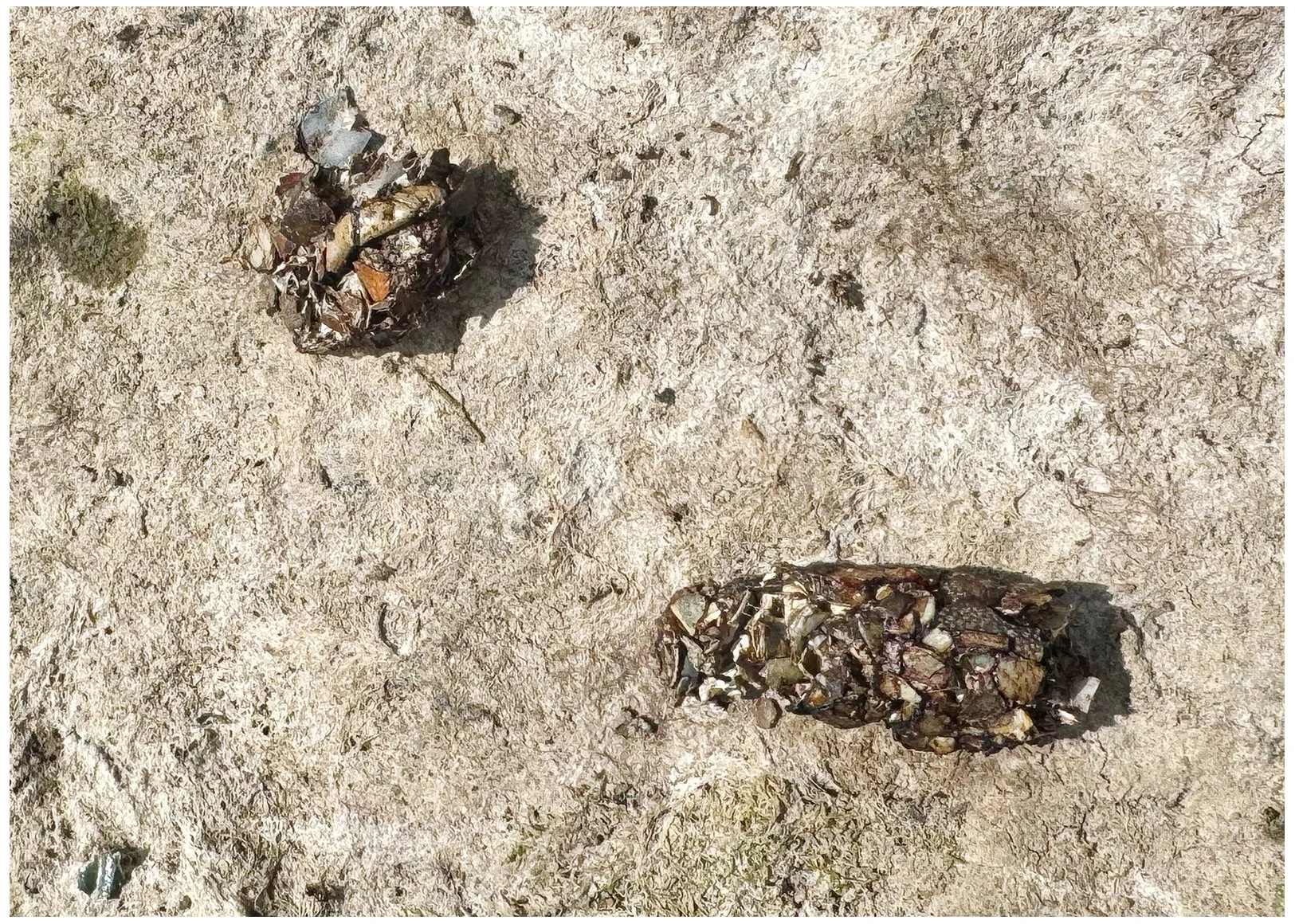
Otter Spraint: Colours may vary :)
Then walk slowly, stop often, and watch the surface. Investigate every splash or unusual ripple. A key signal will be a line of bubbles moving relatively fast in a direct line and the giveaway for those splashes is a trailing tail or a smooth arch of a back.
If you take the camera, treat any photo as a bonus: the light will be low, so watch first and shoot second. Seeing an otter well beats a blurry photo of one every time. But I’d recommend an auto ISO with any max limits removed.
2. Swift screaming parties
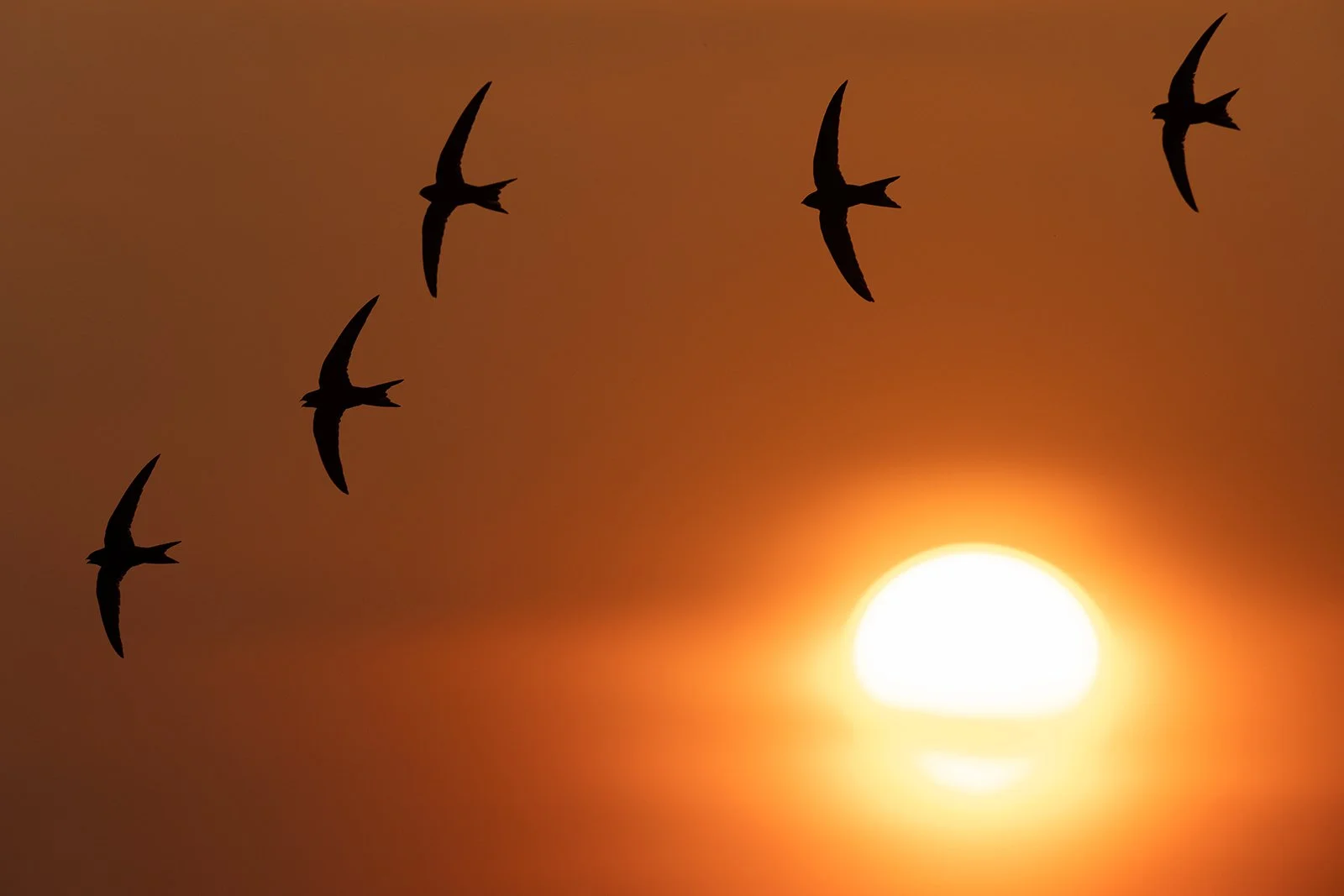
1/5000 f/9 ISO 100
From sunset into those vanilla skies, now is the perfect time to catch groups of swifts as they chase each other around the rooftops, screeching as they go. Stand in the middle of it and it's one of the great free spectacles of a British summer: anchor-shaped silhouettes flickering between chimneys and if you’re really lucky wooshing past you at low altitude!
There's an urgency to this one. The swifts are only with us for a few more weeks, and by early August most will be gone until next May. If you fancy a photo, expose for the sky rather than the birds and let them go black against the afterglow: a sharp silhouette against an apricot cloud says “summer evening” better than any detail shot.
3. Nightjar safari
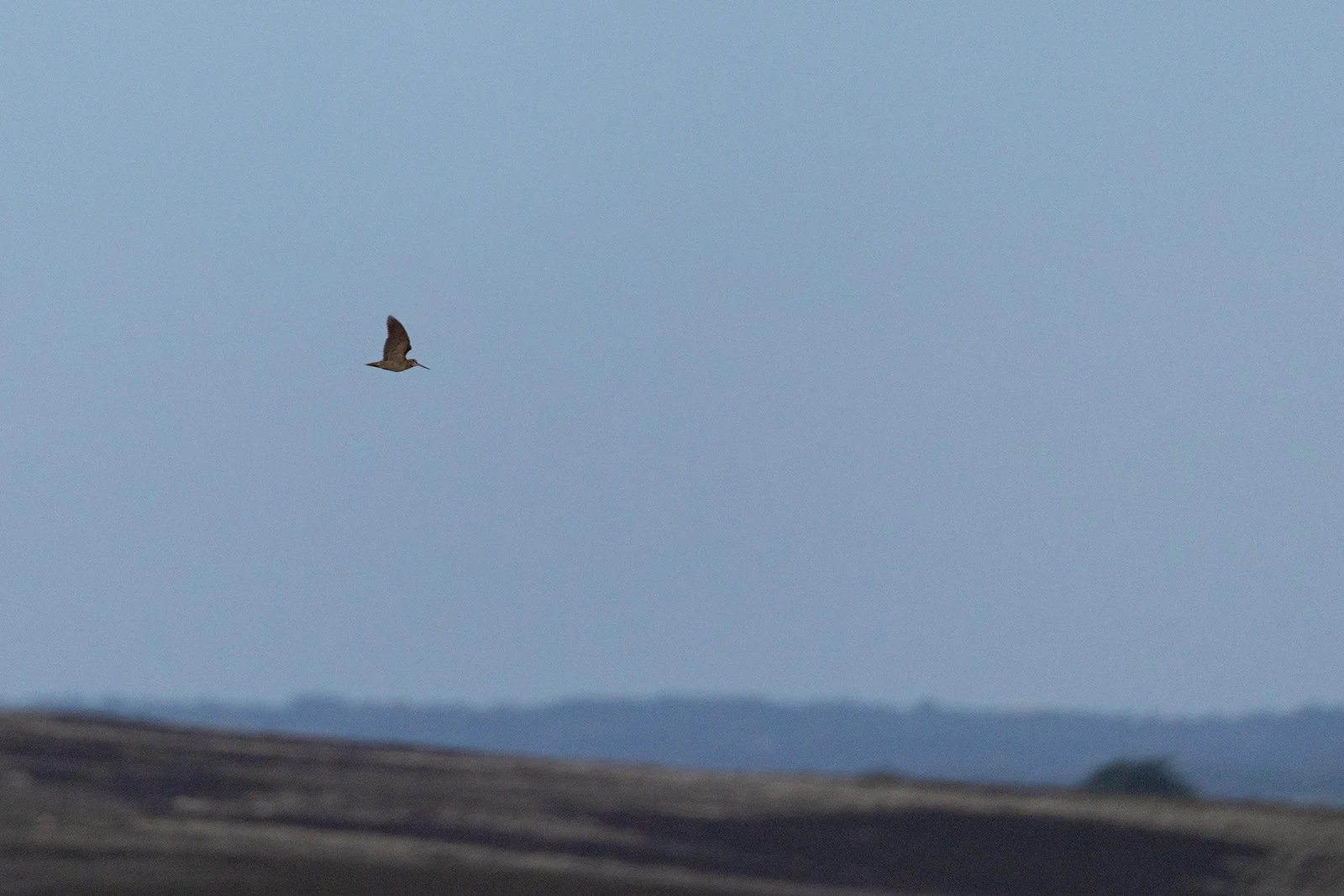
Woodcock, often a precursor to nightjars
For this one you want moorland edges or forestry, especially young plantations where the ground is bare and vegetation sparse. You want to arrive before the light goes so you can watch dusk come down around you. Then listen. The male nightjar's churring is unlike anything else in Britain, a soft mechanical reel that rises and falls somewhere out in the half dark, joined now and then by a sharp wing clap as a bird displays overhead. A good indicator species is woodcock, in fact I’ve never seen a nightjar without spotting a couple of woodcock break cover into the twilight first.
The males carry white patches on their wings and tail, and apparently waving a white handkerchief is known to draw a curious bird in for a closer look, though I've never tried it myself! And a word of honesty on the photography: nightjars after dark are one for the memory rather than the memory card. A silhouette on a bare branch against the last of the light is the realistic target, and the churring is the real souvenir
4. Garden visitors
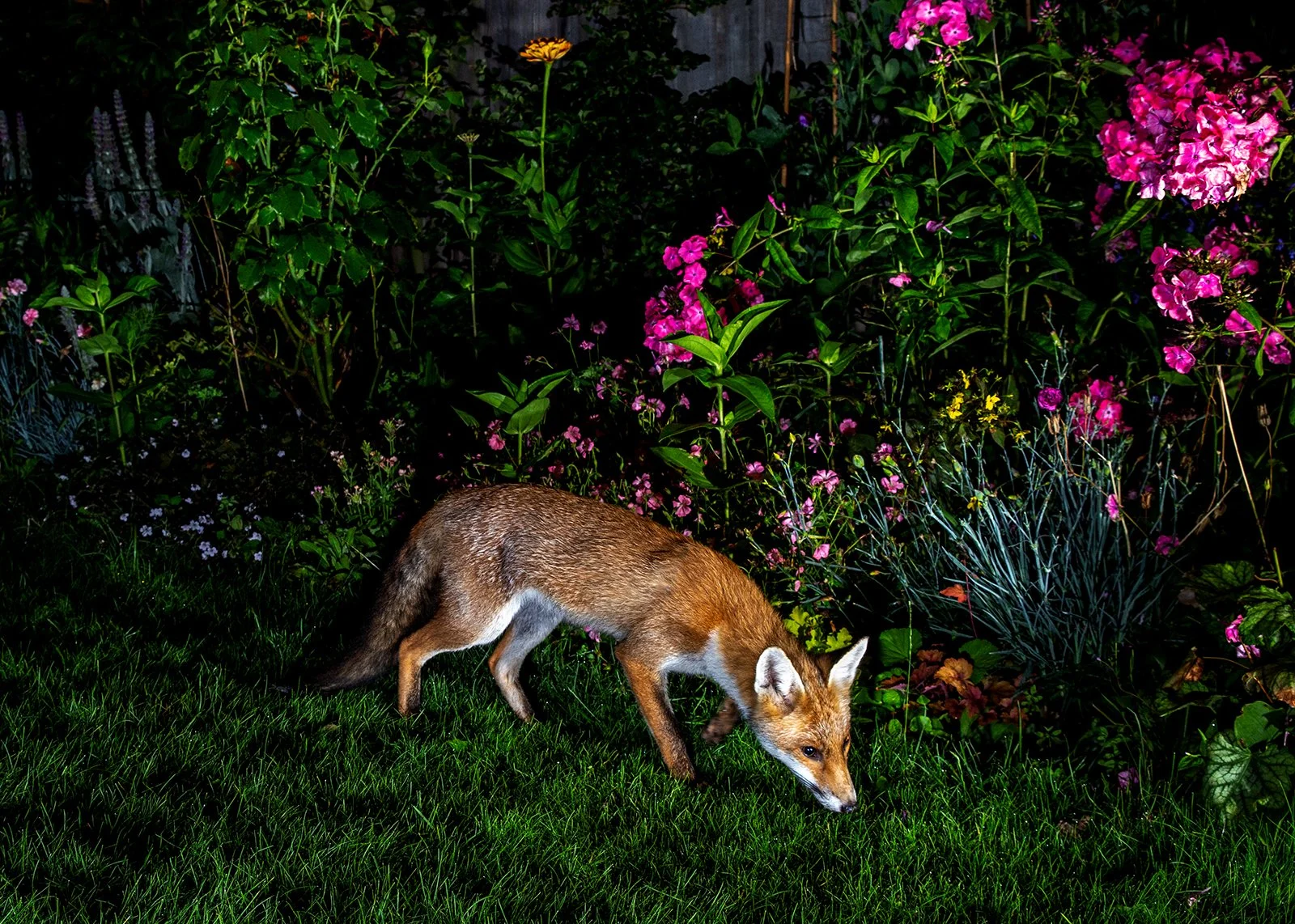
Put the kettle on, turn the house lights off, and step outside. Warm, still July evenings are peak season for the garden shift: a fox catching the last light of day, a hedgehog snuffling its way along the garden path, while overhead an early evening bat makes the most of peak insect numbers. In these increasingly dry summers, it is well worth putting out some water for your garden visitors, hedgehogs are especially prone to dehydration.
It’s not just the mammals that spring to life during the cooler hours. Moths are considered to be more efficient pollinators than bees! As the light fades, a torch can reveal an exciting array of moth species visiting your garden flowers. Even better, a UV torch can uncover a hidden, surreal world of colour (wear safety glasses).
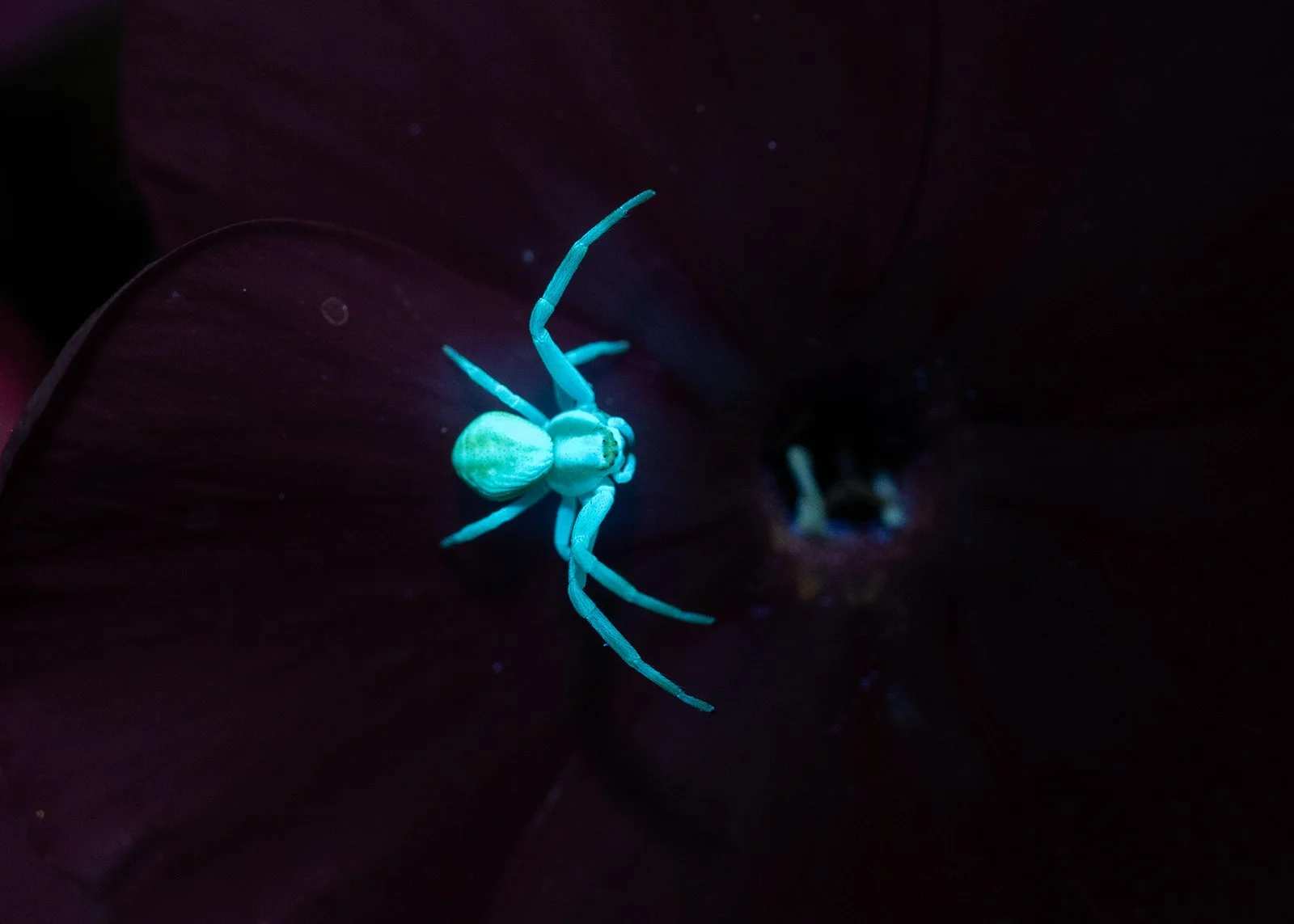
Crab Spider in the garden under UV torch light
5. In Search of Owls

July is a generous month for owls, because this year's young are finding their feet. Barn owls have hungry mouths to feed, which can drawer them out well before dark: a pale shape ghosting low over rough fields and scrub in the last good light, quartering the ground on silent wings. Find a gateway with a view over rough grass, lean on it, and enjoy the stillness.
Little owls keep different habits and can often be seen in daylight. Hunting from a perch in the evening light and dropping onto moths and beetles below. Scan the tops of fence posts, old wall, and telegraph poles for that small, round, silhouette with a faintly disapproving scowl. And closer to home, young tawny owls are emerging from the local woodlands about now and exploring gardens for a quick snack, so an odd squeaky call from the trees after dusk is well worth stepping outside for. For the camera, the little owl is July's kindest owl: find one using a favourite post in golden light, keep your distance and let it settle, and you have a portrait sitting that most wildlife never offers.
That's the full 90 minutes: no VAR, no confusion over the referee’s whistle. Plus you come home feeling better than you did when you left, which is a harder achievement when it comes to watching football! See you out there!
