
Spring is over, the wildlife is quieter and those luscious greens begin to yellow and brown in the dry heat. Add in the school holidays turning every honeypot location into a car park, and it's easy to see why July gets written off as the quiet month for photography.
But inspiration (or lack of) is a state-of-mid!
July is only quiet if you're looking for what June offered. Look at what July actually offers: meadows at peak butterfly, cool green woodland offering exciting dappled light and weather so dramatic it's making national headlines. You might have to work harder to find it, but as always it’s the work that so often makes it worthwhile. Here are four themes to help you get you started…
Blame It on the Weather: Photographing a Summer to Remember
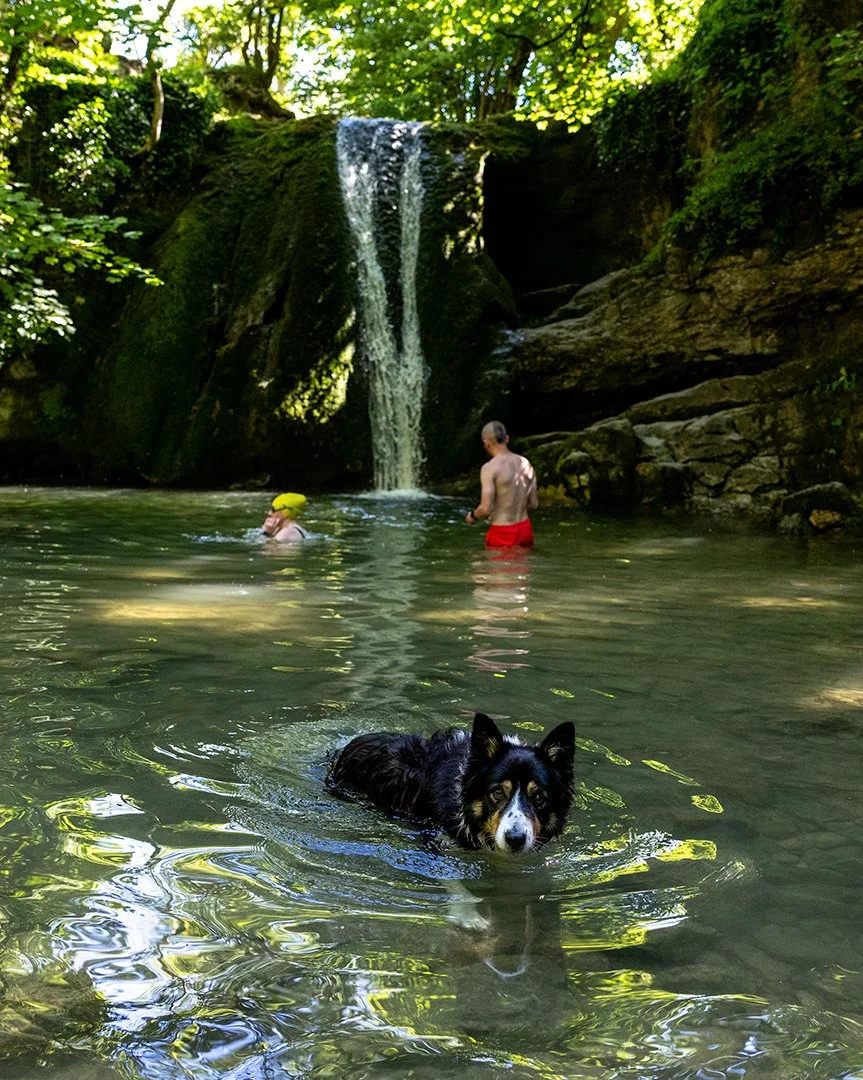
Mountain Rescue Dog Cooling Off, Janet’s Foss, Malham
We've just lived through the warmest June on record in England, and July has just opened with the third heatwave of the year. Whatever your feelings about that (and there's a serious conversation to be had), as photographers we have a responsibility and an opportunity: An opportunity to make a record of the weather, climate change and our varied reactions to it.
The weather itself is only half the picture. The real story is in how people and places respond to it and it's these human stories that give photographs their relevance now and their longevity for decades to come. Think of the archive images we treasure from the infamous summer of '76.
Photograph the Reaction, Not Just the Conditions: A blazing sun is hard to photograph well; a queue for the ice cream van, tourists with fans or umbrellas, or a dog cooling in a stream tells the story instantly. Look for the small adaptations people make to deal with the changes in weather.
Document the Shifts: The most powerful weather stories are about change. Parched, straw-coloured parkland where there was green grass a month ago. The same reservoir photographed as levels drop. The first storm breaking a heatwave and everyone's relief when it does. Return to the same spot and build a project.
Stay Safe & Sensible: Golden hour is kinder to you as well as your images in this weather. Shoot early, shoot late, carry water, and let the middle of the day be for planning (or a forest bath, see below).
Swifts & Swallows: The Fastest Show in the Sky
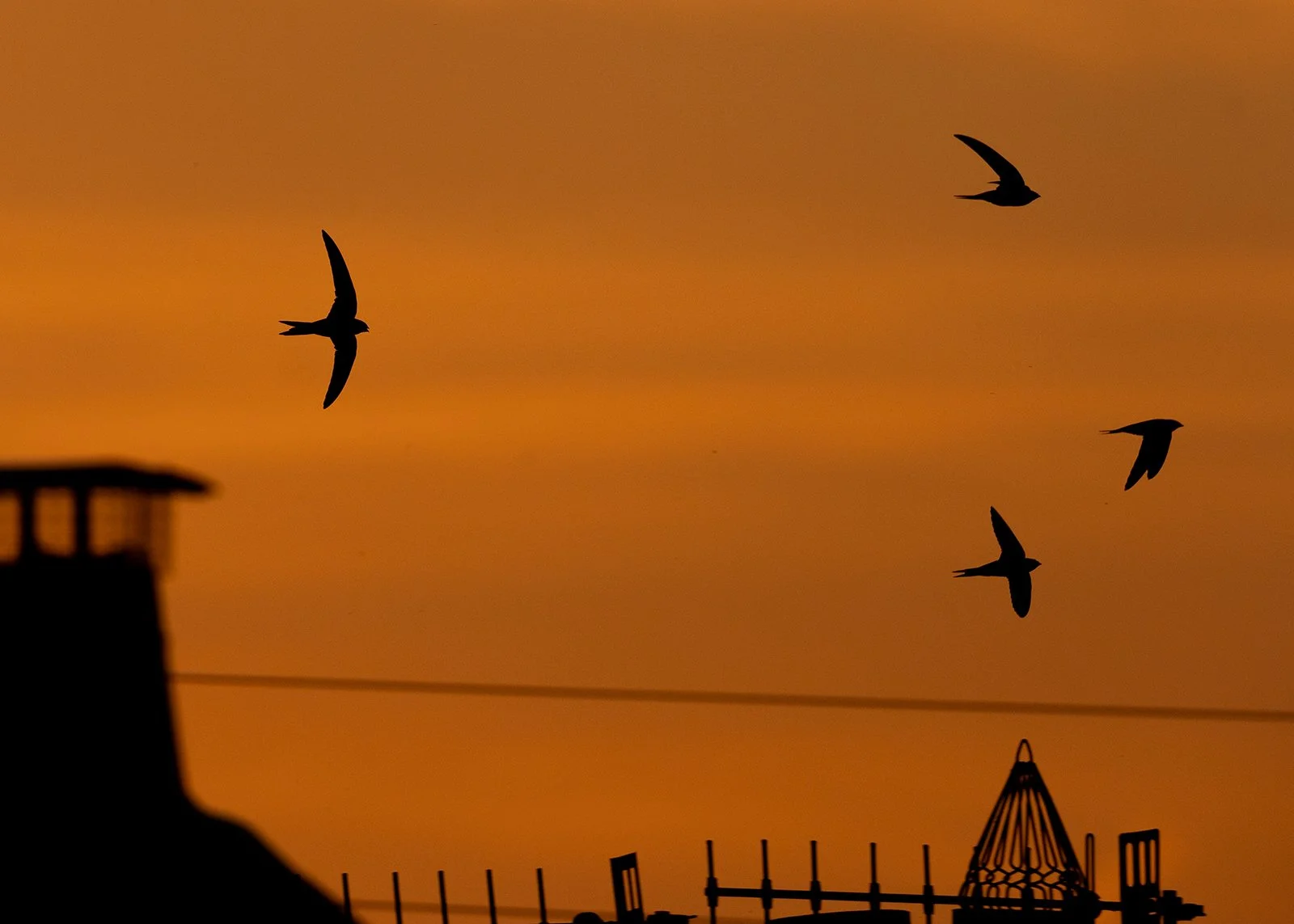
1/3200 f7.1 ISO 400
Look up. July skies are full of some of the most exhilarating flyers we get in the UK and the swifts among them will be gone by early August, so the clock is ticking! Photographing birds in flight at this speed is one of photography's great challenges, and there's no better month to take it on.
First, know what you're pointing at. Swifts are the dark, scythe-winged ones, that almost look like a ship’s anchor, forming screaming in parties around rooftops. They're sooty brown all over and never perch on wires. Swallows have the deep-red throat, navy-blue back and long tail streamers (although the youngsters have shorter tails), and hunt low over fields and water. House martins are the ones with the bright white rump, fluttering higher.
Speed Is Everything: These birds demand your fastest settings. Aim for 1/4000s and let the ISO climb to get there, set it to auto. Modern cameras handle noise far better than they handle motion blur.
Burst & Drive Modes: Set your fastest continuous drive mode and use it in short, considered bursts as the bird passes through.
The Pre-Focus Approach: Rather than chasing birds across the sky, pick your spot and let them come to you. Swallows skim the same beat over a field; swifts circle the same rooftops; both come down to drink at pools, touching the water in a repeated flight line. Fix your focus (or pre-focus manually) on that line and wait.
Build the Composition First: Construct the photograph before the bird arrives, a clean background, the light in the optimum position, a hint of context like a house, barn or hillside then be patient (a tripod can help with this approach). It's the same discipline that makes every kind of wildlife photography better.
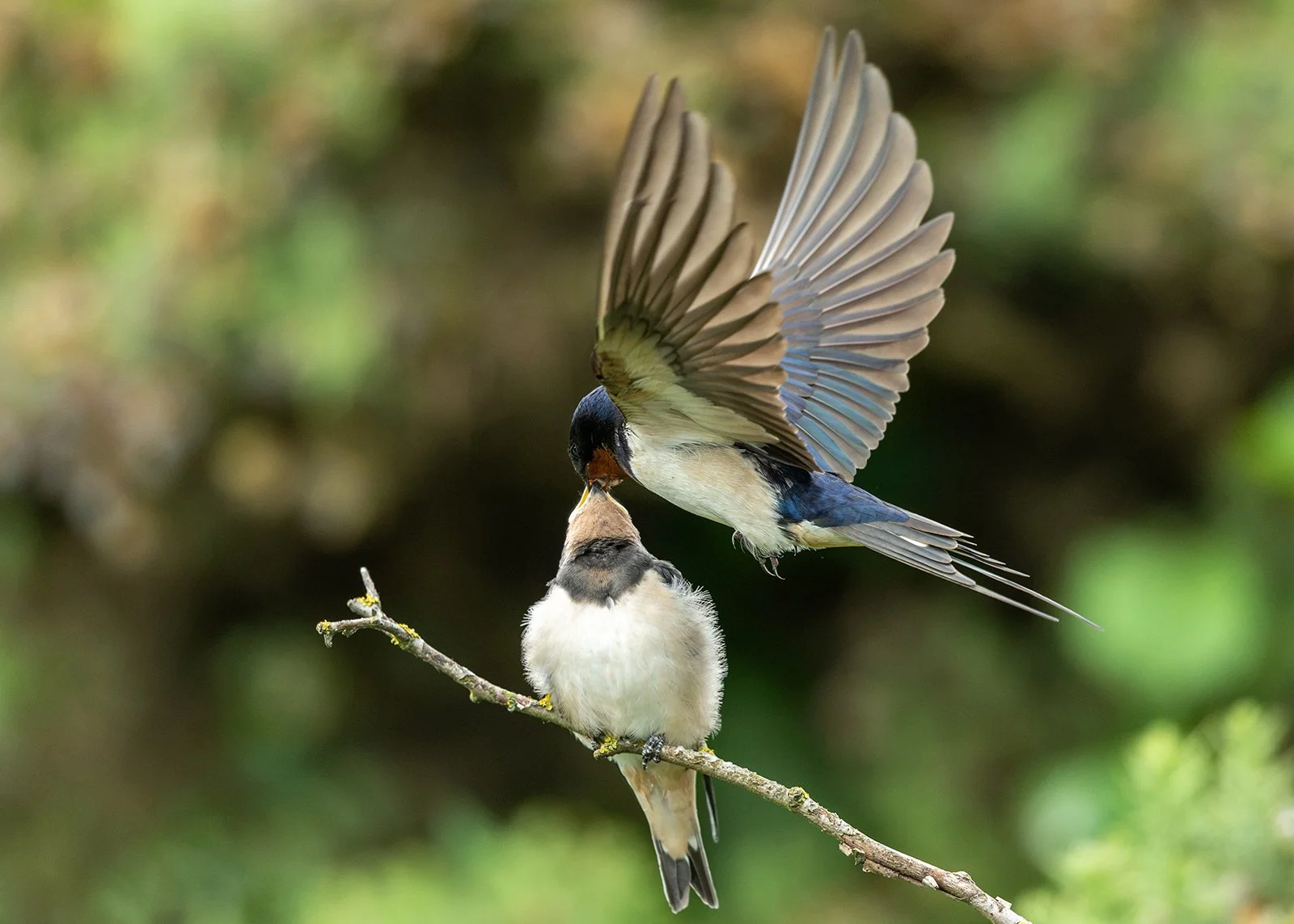
1/4000 f5/6 ISO 5000
Take a Forest Bath: Coolness, Wildness & Dappled Light
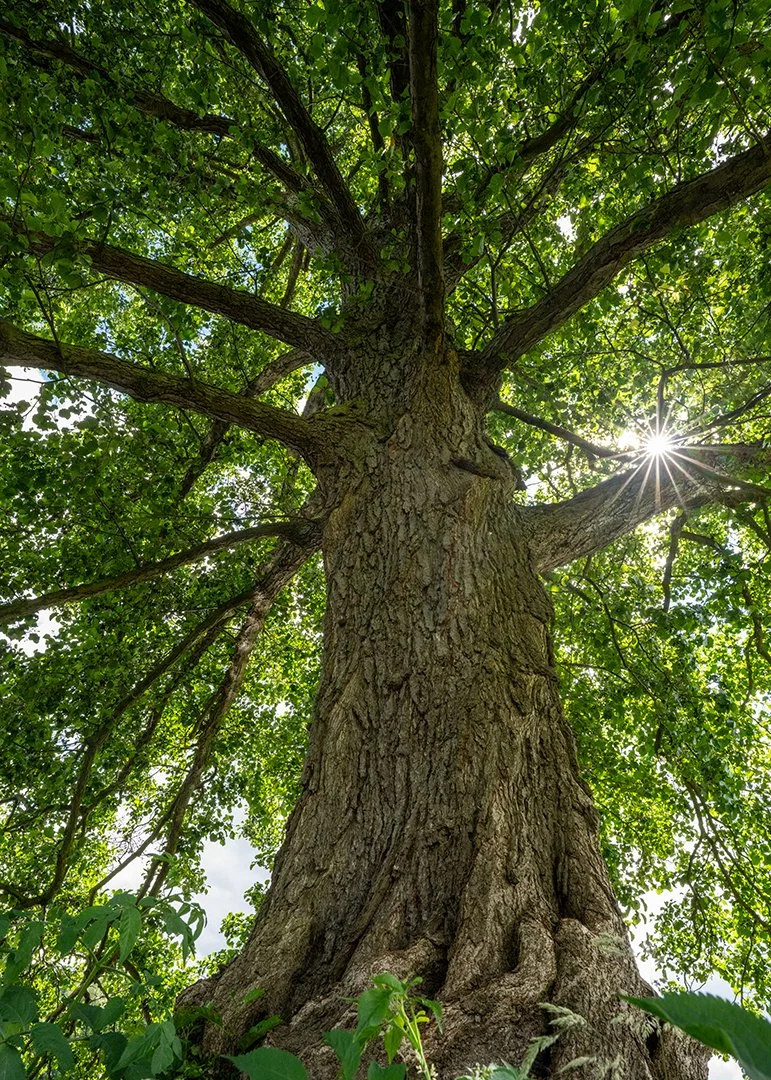
When the heat is at its heaviest, the woods can be ten degrees cooler and a world quieter. The Japanese call it shinrin-yoku, forest bathing, the simple practice of being slowly and attentively among trees. It happens to be very good for you, and it happens to be (in my opinion) even better with a camera in hand, because the slowing down is precisely what good woodland photography demands.
Woodlands in July is about enjoying the growth and wildness as plants and leaves try to maximise their exposure to the light. And to me, that dappled light moving constantly with the movement of the sun and breeze on the leaves is what makes it such a special environment to absorb.
Expose for the Light, Not the Shade: Exposure compensation is fairly vital in these environments, and it’s a feature available to camera phone users as well via the settings. Dial in -1 to -2 so the sunlit patches hold their detail and the shadows sink to near-black. That deepened contrast is what transforms a cluttered wood into something theatrical.
Let One Thing Be Lit: Find a single subject in a spotlight. A gnarly tree branch, a foxglove, a moss-covered root, then let everything around it fall away into shadow.
Slow Right Down: Walk further in than the first pretty spot. Sit for ten minutes and watch where the light moves. The wood will show you more the longer you stay still.
Butterflies: From Portraits to Action
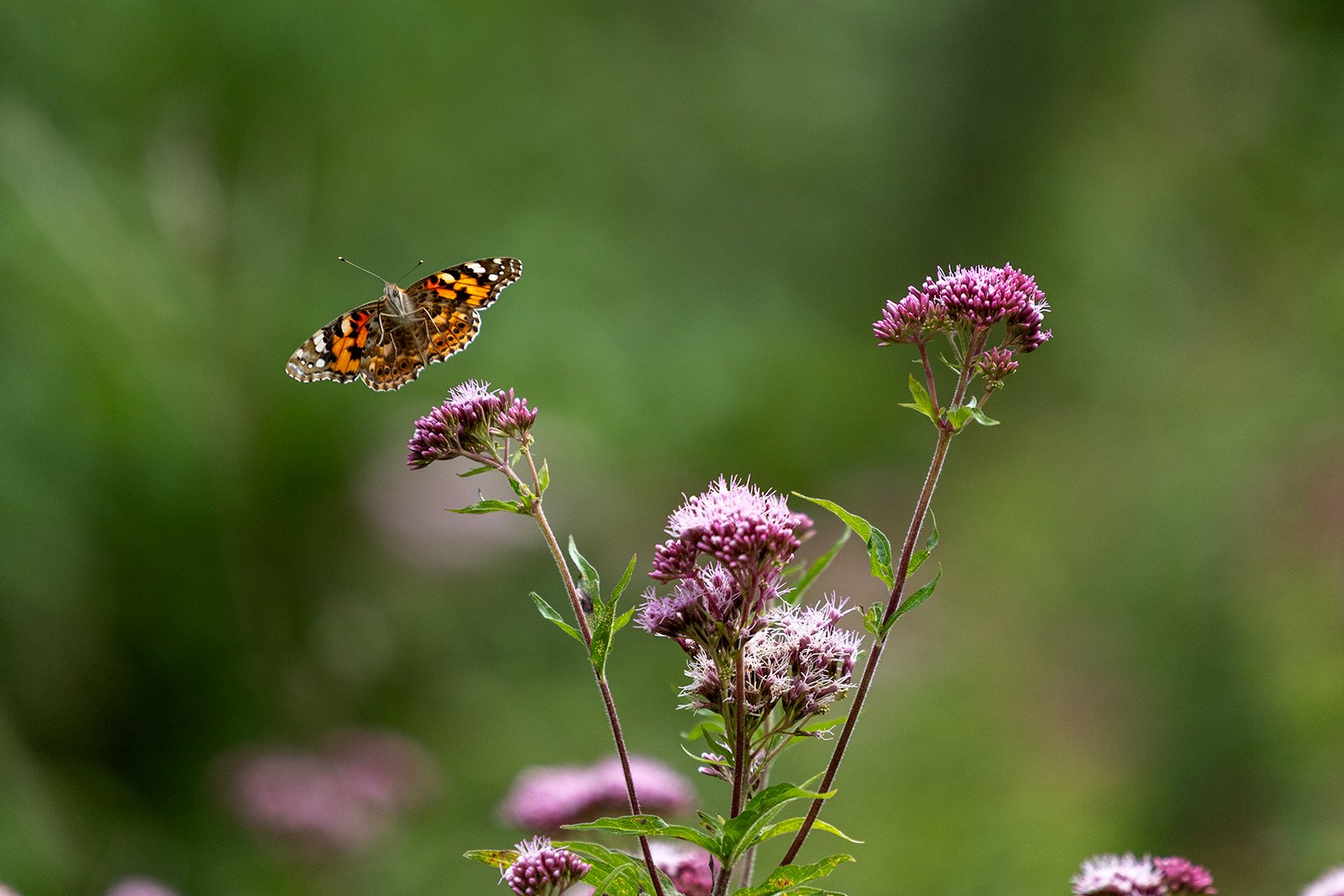
1/4000 f/2.8 ISO 400
July is typically peak butterfly. Gatekeepers, ringlets, marbled whites, skippers, commas, peacocks as well as fritillaries and day flying moths like burnets and cinnabar. From buddleia bushes to meadows, hedgerows and brambles, even on paths, walls and fences, they are everywhere! They're the perfect subject for testing yourself and honing your photography skills. Treat them not just as a subject this month, but as a training ground.
Start with the Portrait: A basking butterfly, wings open in morning sun, photographed with well considered background. Approach slowly, mind your shadow.
Go Close, Go Macro: Move in for the detail no one sees the fine detail on a wing, the curl of a proboscis. You don't need a dedicated macro lens to start (a telephoto at its closest focus works well), but this is where macro technique really earns its keep: exploring depth of field, considered focusing and steady hands. Take it a step further with focus stacking.
Pull Wide, Place Them in the Landscape: Context is often the difference between a good shot and a great photograph. Switch to a wider perspective and photograph the butterfly in context. This is the shot that is often overlooked, and can be tricky to master but satisfying when done well.
Graduate to Flight: A fast shutter (1/3200s+), high burst mode, and pre-focussing will all help, but patience and perseverance are the real key ingredients. Find a favoured flower or bathing spot, compose, focus and wait (a tripod and remote shutter will help greatly). Expect a memory card full of duds and treasure the one that works.
Inspiration of the Month
Jaime Rojo: Twenty Years with the Monarchs
Wildlife photographer · National Geographic Explorer
Since we're chasing butterflies this month, some inspiration on what happens when a photographer commits to them completely. Spanish photographer Jaime Rojo has spent more than two decades documenting the monarch butterfly and its extraordinary multi-generational migration between Canada and the mountain forests of central Mexico, where the butterflies gather in their millions to overwinter, clustering so densely that fir branches bow under their weight.
His long-term project Saving the Monarchs became a National Geographic cover story in 2024 and earned him honours at both World Press Photo and Wildlife Photographer of the Year, where his portfolio Migration of the Monarchs was highly commended in the competition's sixtieth year.
Twenty years with a single species, returning again and again, photographing not just the spectacle but the people fighting to protect it: the scientists, the forest guardians, the local communities whose lives are entwined with the migration.
Explore Jaime's work at jaimerojo.com.
Photo Walk of the Month: Street & Travel Photography, London — 1st August
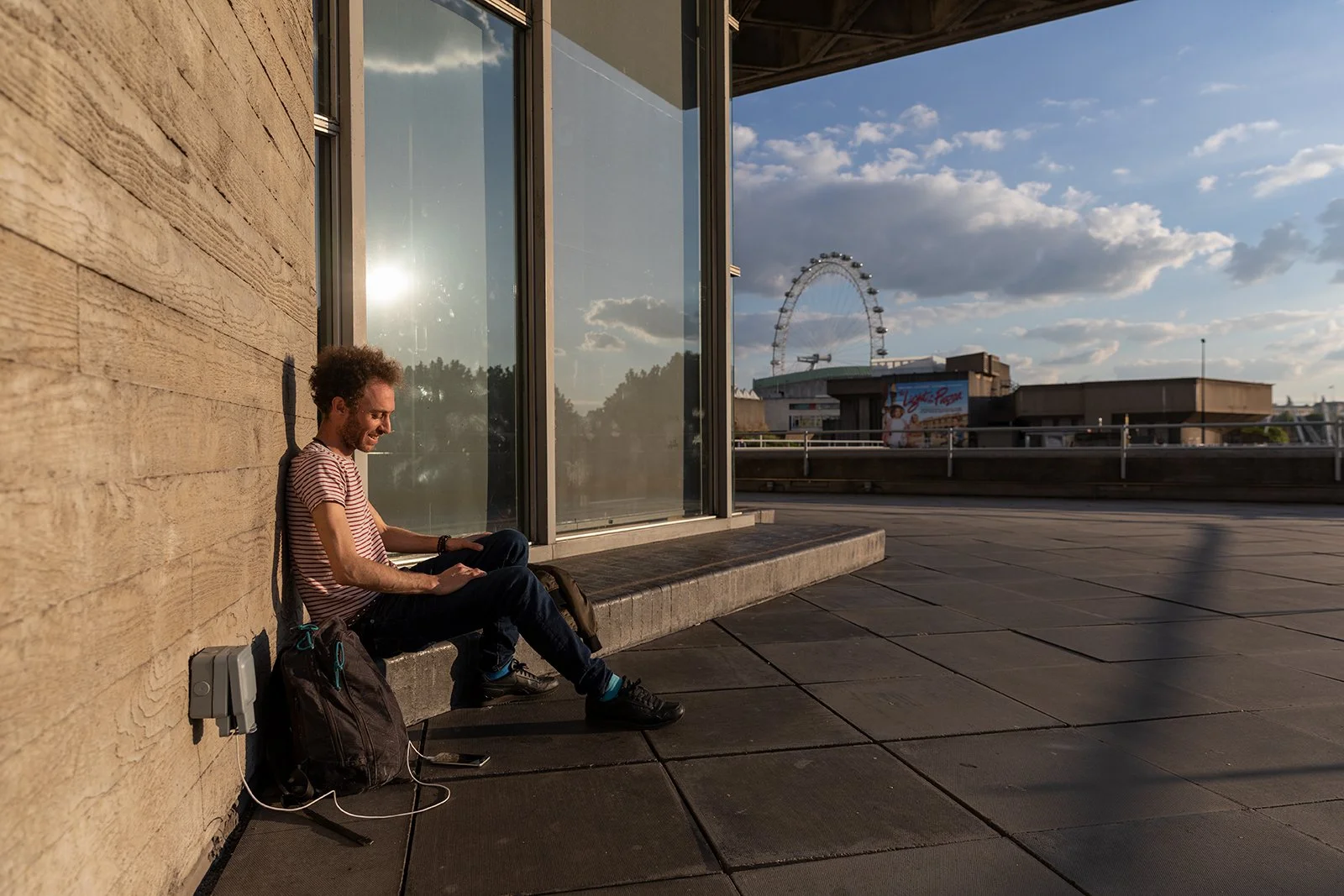
A capital day out with a camera. We'll be exploring London's streets on the 1st of August — light, layers, people and place — and if this month's weather theme has whetted your appetite for photographing how people respond to a British summer, there's nowhere better. A few places are still available.
