
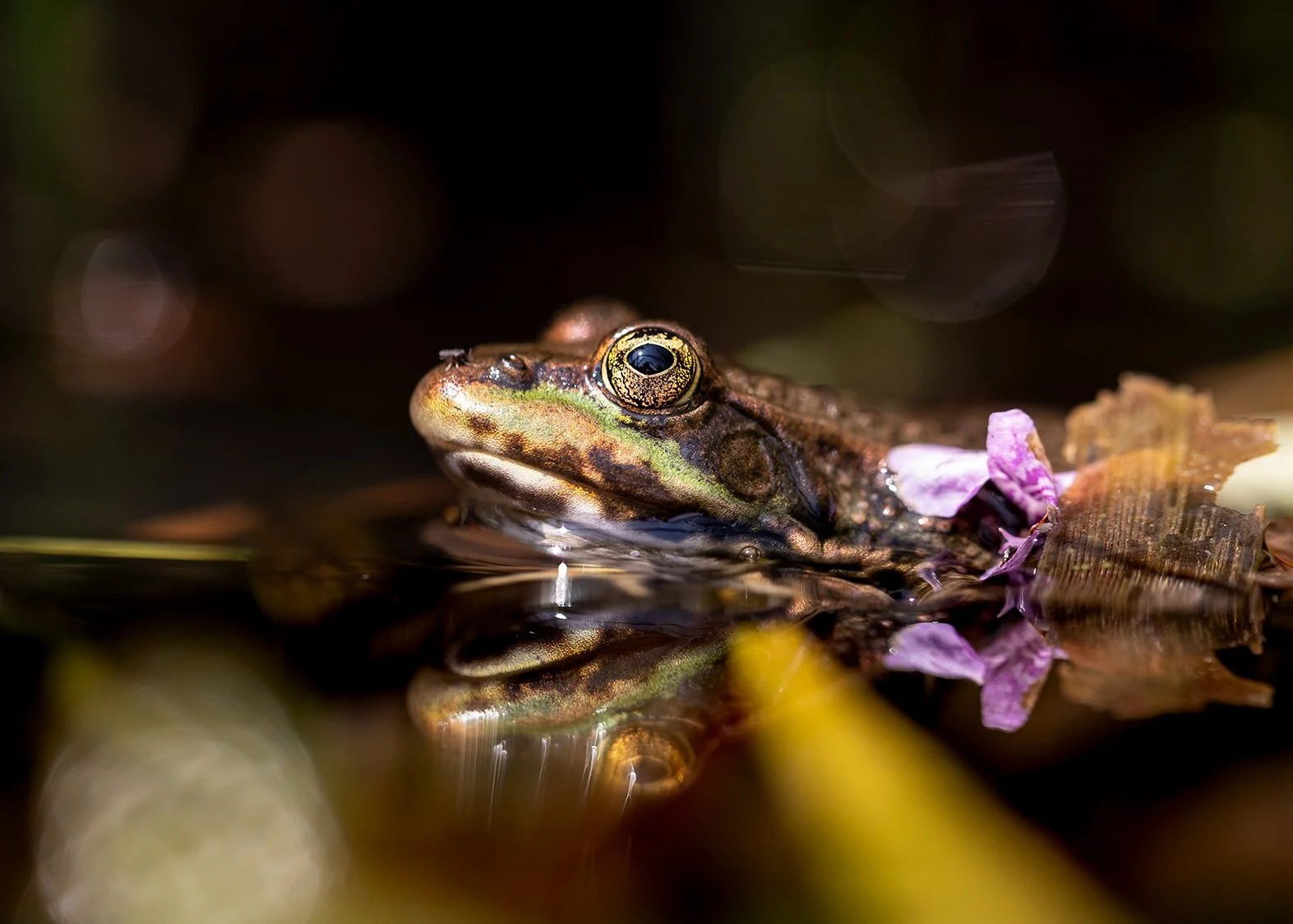
Is it just us Brits that never stop talking weather or is it simply a human trait?! Yes, a June heatwave is upon us and in the words of the Fast Show, it’s “Scorchio” out there!
It sounds obvious to say take the heat seriously but it's worth saying anyway, because photographers are uniquely good at ignoring sensible boundaries, particularly when in pursuit of a shot! We'll happily stand in an exposed field for three hours waiting for the light to do something interesting, water bottle long since empty, hat left on the kitchen table, fully absorbed in a hedge. Heat exhaustion doesn't announce itself politely. It creeps up while you're chimping at the back of the camera, and by the time you notice you feel awful, you're already a fair way down a road you don't want to be on.
So: water, shade, sun cream, a hat, and the humility to call it a day before your body calls it for you. Your camera gear has limits too; sensors and batteries don't love baking in direct sun, and a black camera bag left on a wall heats up like a kettle. Right. Lecture over. Let's talk photography...
The Problems: Why Midday in a Heatwave Is Quietly Working Against You
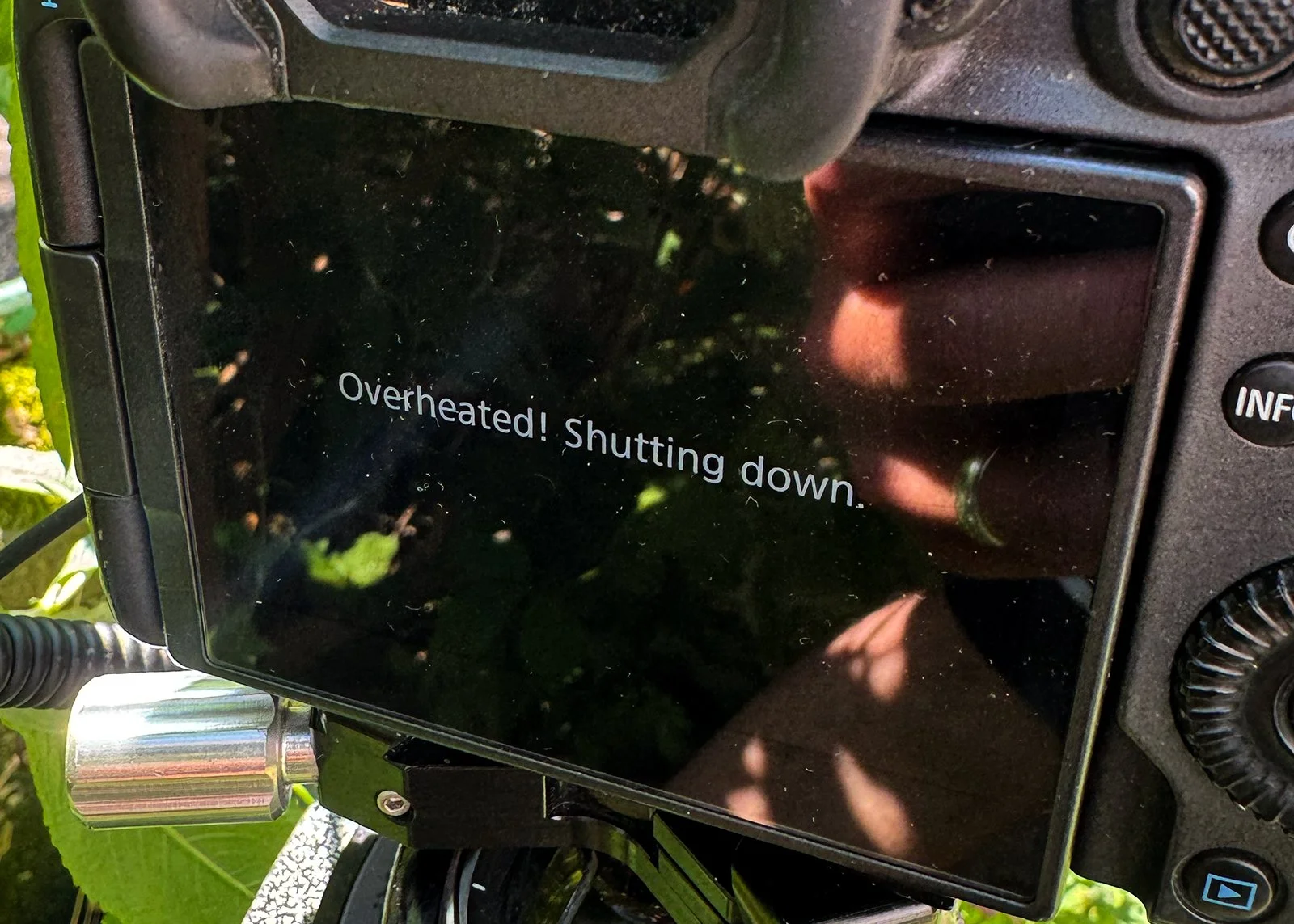
Mirrorless Camera Overheating
Here's the frustrating irony. That you’ll likely be familiar with. The conditions that normal people consider “perfect for photography” are often the worst to shoot in.
Heat haze. That shimmer rising off a hot road or a sun-baked field is the bane of anyone shooting at distance. It turns crisp detail into a soft, wobbling mess, and there's no lens sharp enough and no amount of money you can throw at it to fix it. Wildlife and landscape photographers feel this most your beautiful long lens becomes a very painful way of photographing a heat mirage. Or maybe they'll make a great custom puzzle gift?!
Hot heat. Be very cautious with how long you leave your camera (and lenses and tripods), not just because those black electronic, mechanic boxes will get hot, mirrorless cameras will also shut themselves down if and when they get too hot.
High sun and unflattering light. When the sun is directly overhead, it casts hard, ugly shadows straight down. Dark shadows under squinting eyes (panda eyes effect) , harsh contrast, washed-out highlights, and none of that warm, raking glow that makes a photograph sing.
Everything sensible takes shelter. People retreat indoors or huddle under any available tree. Wildlife does exactly the same birds go quiet, mammals lie low, and the whole landscape takes on the stillness of a place where every living thing has had the good sense to find shade. Everything, that is, except the photographer!
For Photographers Who Need to Scratch that Itch
The good news is that a heatwave doesn't mean hanging up the camera. It just means being a bit cannier about the what, where, and when.
Bring the outdoors in
If the garden's too hot to lurk in, let the garden come to you. Snip a few flowers, bring them inside, and set up a still life somewhere cool by a window. Soft, diffused indoor light is wonderful for botanical close-ups, and you've got total control, no wind nudging your subject, no sweat dripping on the viewfinder, and a cold drink within arm's reach. It's slow, meditative photography, and it's a genuinely good way to sharpen your eye for composition and light. Why not experiment even further by freezing the flowers in water and photographing the results.
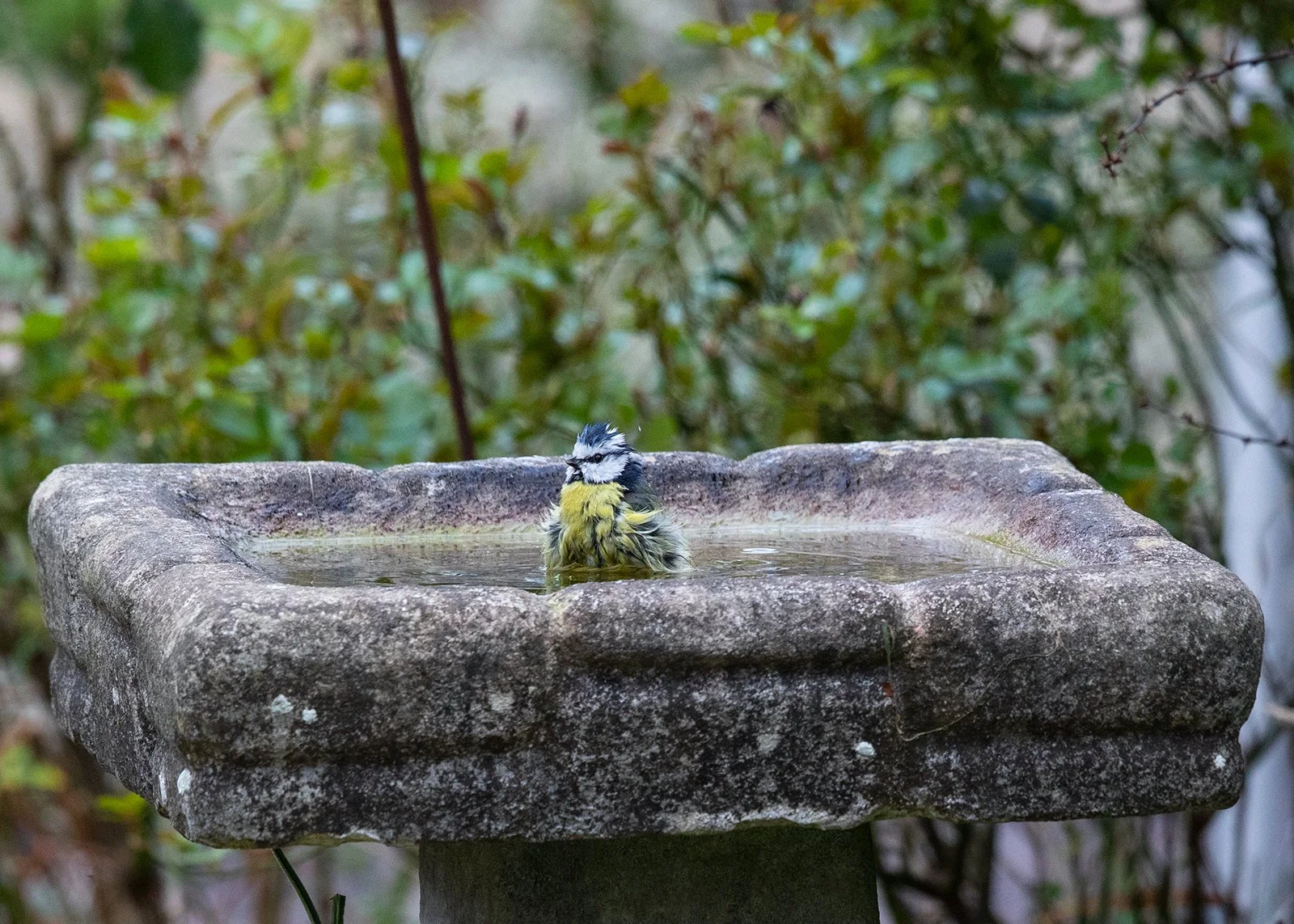
Set up a bird bath and let the wildlife come to you
In hot, dry weather, water is gold. A simple bird bath in the garden becomes a magnet. Birds need to drink and bathe, and while we might not use the same water for both, wildlife tends to be less fussy!
A reliable water source in a heatwave will pull in visitors both familiar and less so. Set yourself up comfortably (ideally somewhere shaded, with a clean background behind the bath), you could even try using a remote from the cool of the kitchen.
Head for the woods
When open ground is a heat-shimmering wasteland, woodland comes into its own. The canopy diffuses and mottles that brutal overhead sun into different. The temperature drops noticeably under the trees, and there's shade for both you and your subjects. Dappled light is its own creative challenge. It can be tricky to expose for but it's far more rewarding than the harsh midday glare, and woodland in summer is full of life if you slow down and look.
Shoot at the edges of the day
This is the big one. Early morning and evening are when a heatwave actually becomes your friend. The light goes golden and low, the haze settles, the air cools, and the wildlife re-energises. You'll be more comfortable, your subjects will be more active, and your images will have all the warmth and depth that’s missing from the midday sun. Set an early alarm, and you'll often have the best light and the quietest locations entirely to yourself.
Make the hottest hours productive (or at least pleasant)
When it's too hot to shoot, lean into it. The midday lull is the perfect window to:
Catch up on editing. Pull the curtains, fire up your editing software, and work through that backlog in air-conditioned (or at least curtain-shaded) comfort.
Get to know your camera properly. Most of us use a fraction of what our cameras can do. Use the downtime to set up custom buttons, build out your custom modes, and practice switching settings until it's muscle memory. The middle of a heatwave is a gift of guilt-free tinkering time.
Learn something new. Pick one aspect of photography you've always meant to get better at - focus stacking, off-camera flash, a tricky bit of post-processing and disappear down a YouTube rabbit hole. You'll come out the other side a slightly better photographer and a lot cooler.
Keep Calm, Eat ice cream. This is non-negotiable and, frankly, the most important technique in this entire article. Consider it essential equipment maintenance for the photographer.
In Short
Take the heat genuinely seriously, shift your shooting to the cool, golden edges of the day, get creative with shade and water and the comfort of your own home, and treat those punishing middle hours as a chance to edit, learn, and recover. Do that, and you'll come away with better images and avoid melting into the landscape.
