
November has a reputation as the gloomy month, and it doesn't deserve it. Look properly and it's full of bright sparks: fireworks over the rooftops, beech woods at their gold and copper best, hedges loaded with red berries and the hungry birds that come in for them, while towns and city centres switch on their Christmas lights. Every one of them is a story waiting to be capture and they all disappear as quickly as they appear. So this month's theme is catching the bright moments before they're gone!
Fireworks That Tell a Story
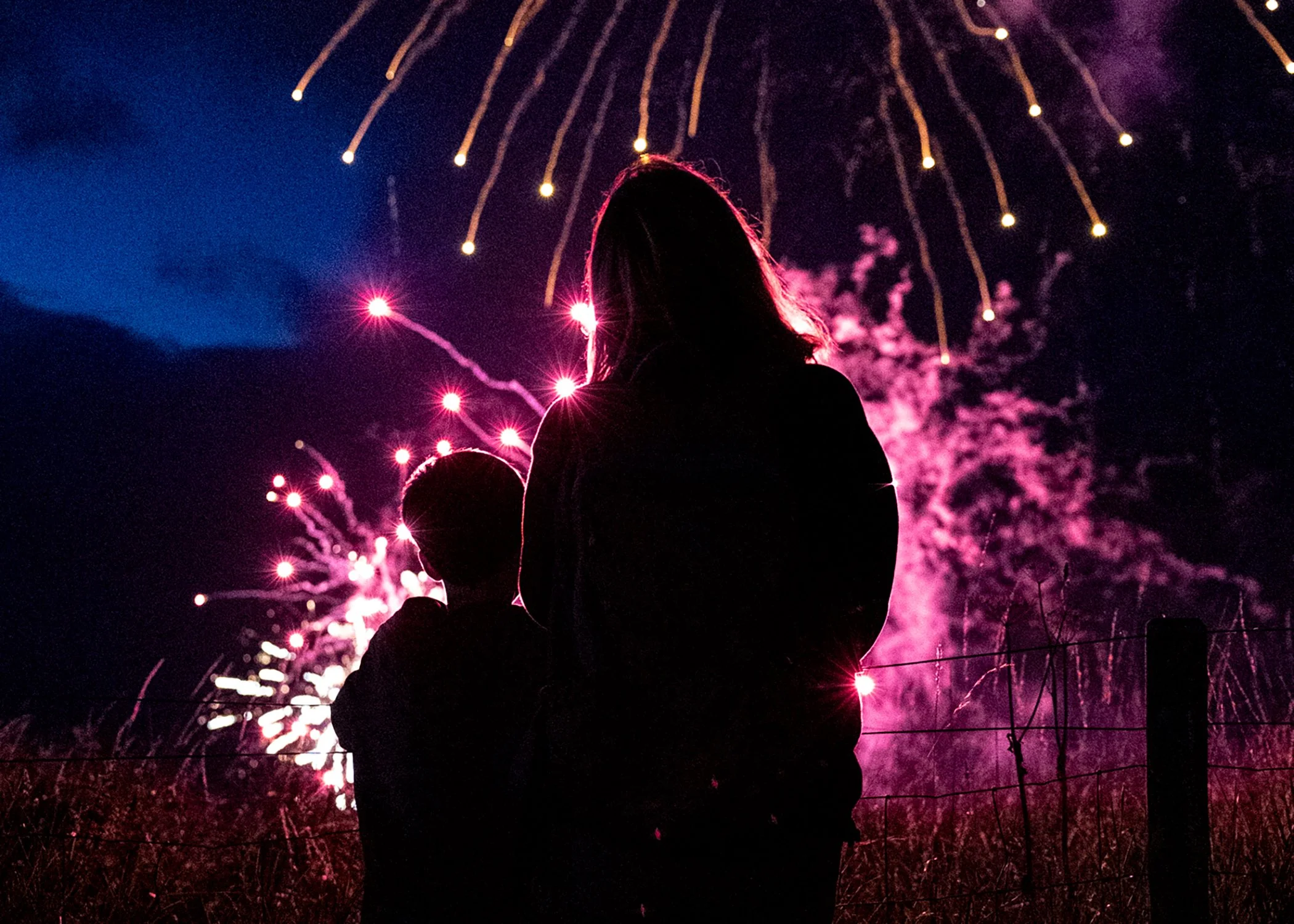
1/100 f2.8 ISO 25,600
Fireworks can be tricky to capture well. Either you saw a golden willow filling the sky and got a blurry orange smudge, or you got a perfectly decent burst that looks exactly like every other burst on the internet. There's no single right way to fix it. It depends on what you're holding and what story you want to tell, from faces lit by the glow to trails arcing over a castle. But one setting helps everyone.
Turn the brightness down. Fireworks are small points of very bright light in a big black sky, and phones and cameras alike try to brighten all that darkness, burning out the explosions of colour into pure white white blobs. Use exposure compensation ( + / - dial, or button on cameras and phones) to counteract this. Set it to -1 or -2 (each step down halves the light) and the highlights, the brightest parts of the picture, keep their colour.
If you're on a phone, the main job is keeping it still.
Steady the phone. Most blurry phone fireworks come from the phone moving, not from the phone itself. Tuck your elbows in and lean on a wall, or better still use a tripod or a clamp on a fence.
Darken it down. Tap on the sky where the bursts are going off, then slide your finger down or use the “exposure” setting in the popup menu
Consider switching night mode off, especially if it smears the bursts.
If you're using a camera, you can experiment even further…
Handheld and quick is the one for telling the story. Push the ISO up and you can use a shutter speed fast enough to freeze the people under the fireworks. I’m not a huge fan of image stabilisation, but it may prove useful here.
Set around 1/100 of a second, open the aperture wide (low f number) and let the ISO climb (auto). Shutter priority (S or Tv on the dial), or manual with auto ISO, keep exposure compensation at -1 or -2.
Use a tripod and slow the shutter for the full effect. Leave the shutter open for seconds - each spark draws its whole path across the sky. That's a long exposure, and it shows the fireworks moving through a place: trails arcing over the castle, reflections stretching across the river, the crowd softly blurred below.
Start at ISO 100, f/8 in Aperture Priority. Focus on the first burst, then switch the lens to MF (manual focus), adjust the ISO to change (and experiment with) the shutter speed for different effects. Use a remote.
If you’re hosting your own bonfire night don’t forget to check for hedgehogs!
Real Autumn: Beat the Wind and the First Hard Frost
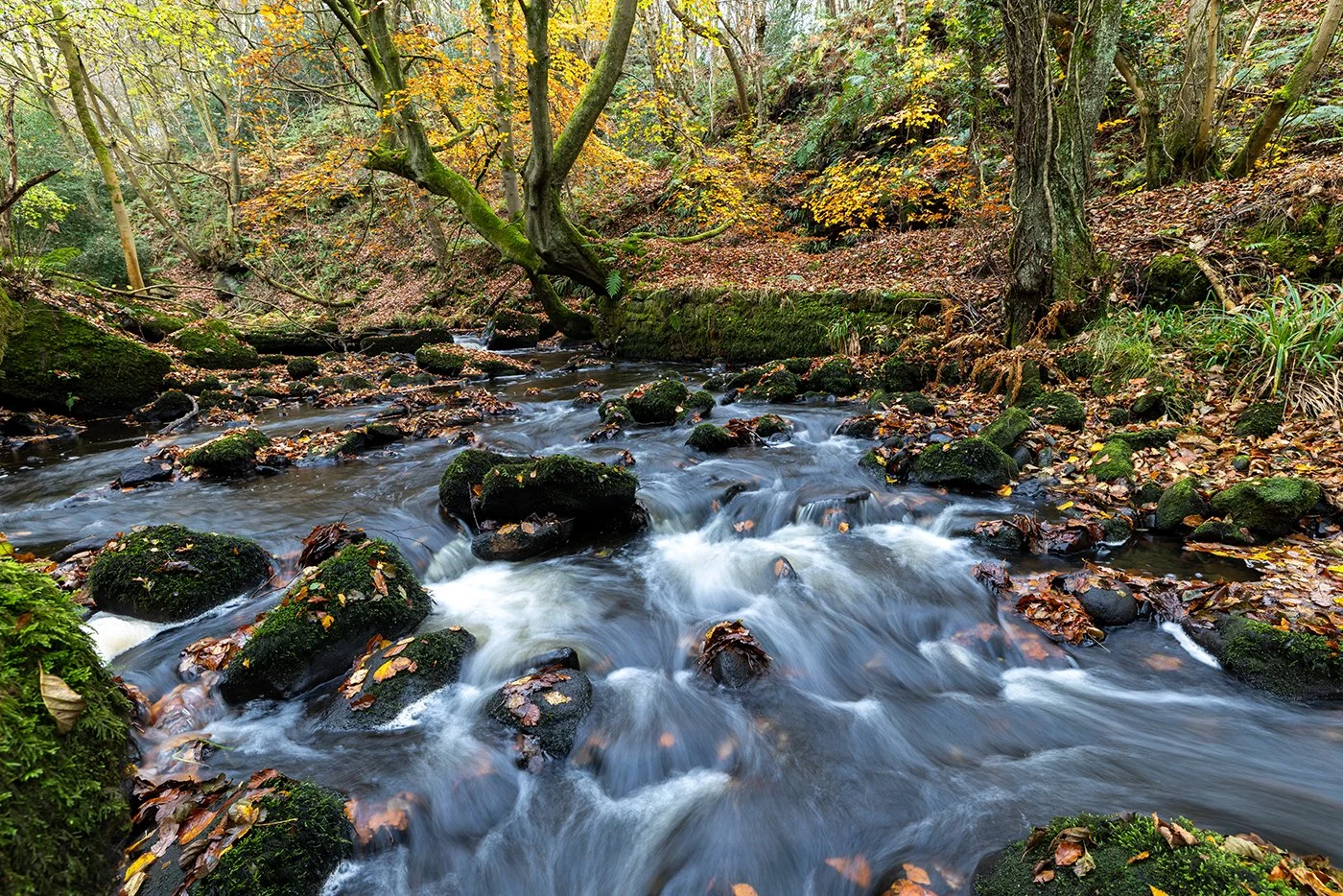
0.5 sec f9 ISO 100
October gets the credit, but in my experience November is when autumn photography gets properly iconic. The beech woods go gold and copper right down to the path, oaks turn gold late, often when most other trees are already bare, and the larch plantations on the valley sides light up last of all. Larch is the only conifer to lose its needles, and before it does they turn a fine gold.
The catch is that it's a race. One proper gale and the canopy is on the floor; one hard frost and a lot of what's left follows it. So this is the month to keep an eye on the forecast and drop everything for the right day.
Watch the wind, not the rain. A still, grey day straight after rain is often perfect. Cloud gives you soft light, meaning light with no harsh shadows, which lets the colours show at their richest, and wet leaves are darker and more saturated than dry ones.
Shoot into the light. Put the sun behind a branch of beech or a single leaf and it glows like stained glass.
Look down as well as up. A single gold leaf on a mossy boulder, a carpet of copper along the path, leaves turning in an eddy on the beck. For the eddy, put the camera on a tripod and use a slow shutter speed of a second or two, and the leaves will draw slow spirals on the water.
When the frost comes, go out in it. The first hard frost of the year is bad news for the leaves still on the trees and good news for the ones on the ground. Every edge goes white, and gold against white in low sun is about as good as autumn gets. Be there before the sun reaches it, because the frost goes in minutes once it does.
Don't stop when the wind wins. Trimmed beech hedges keep their dead leaves until spring, oak saplings often hang on to theirs, and a bare tree with the last three leaves holding on tells the end of the story better than a full canopy ever could.
The Berry Eaters: Let the Birds Come to You
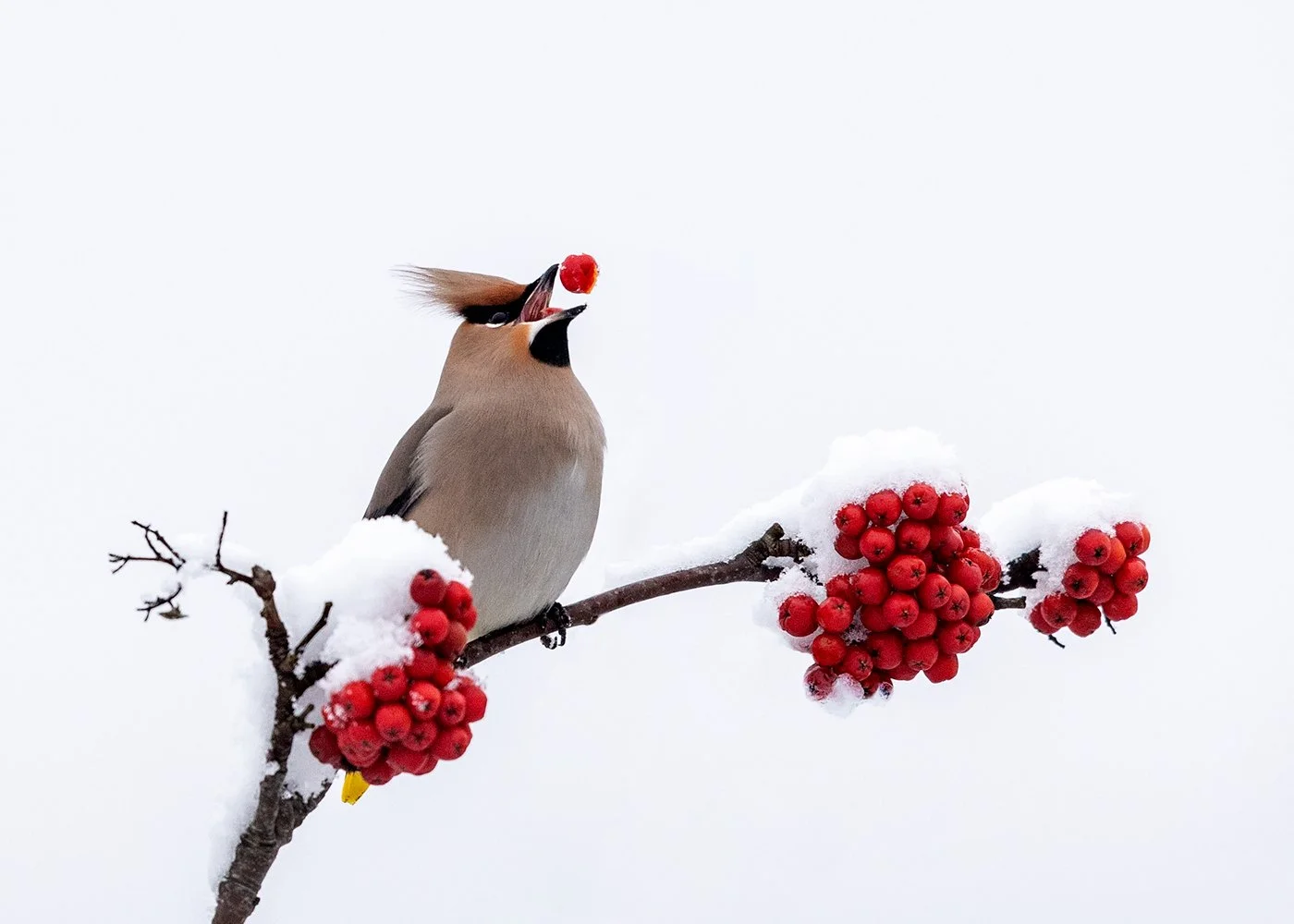
1/2000 f4 ISO 2000 - Photo from 2023, a group of 10+ Waxwings arrived in late November hanging around Ilkley Train Station for over a week.
The hedges are loaded right now. Hawthorn, rowan, holly an irresistible feast . Redwings, mostly from Iceland and Scandinavia, move through the hedgerows in flocks, often mixed with fieldfares, flashing orange-red under the wings as they flit from bush to bush. Look for the white stripe over the eye. Starlings performing ram raids with their iridescent purple and green sheen. And if you’re really lucky (or willing to travel) Waxwings!
There mere hope of seeing a Waxwing is enough to brighten the gloomiest of days, and this could be your year to see them. They breed in the northern forests of Scandinavia and Russia, and in years when the berries fail there they come over in numbers, usually in the east and north first.
Wild Ken Hill in Norfolk has suggested a bad berry crop in Scandinavia this year, which could mean a bumper winter, and by the first week of November there were already sightings at several spots across Norfolk, photos coming out of Norwich and birds turning up in Perthshire. Rowan is their favourite, which is why the classic waxwing photograph is taken in a supermarket car park. I follow the Waxwing Locations Group on Facebook for sightings, so join that or keep an eye on your local birding group sightings page, as wells as apps like Bird Guides and eBird.
Here's the mistake almost we all make with berry eaters. Attempting to get closer you end up directly underneath it, photographing its belly against a white sky.
Find the tree, not the bird. Spend a little time watching and you'll notice that the birds keep going back to the same trees or hedge. That's your spot.
Choose your angle before they arrive. Stand far enough back that you're level with the berries rather than under them. Then find your composition and wait.
A good berry tree rarely stays empty for long
Freeze the moment. Berry eaters are quick, plucking a berry, tossing it back and swallowing in a blink, so use a fast shutter speed of 1/1000 of a second, ideally quicker if the light allows and burst mode
Be kind. Winter is hard work for small birds and every minute spent feeding counts. If they lift off when you move, you're too close, so back off and let them settle.
Festive Fetes: Find the Story Behind the Switch-On
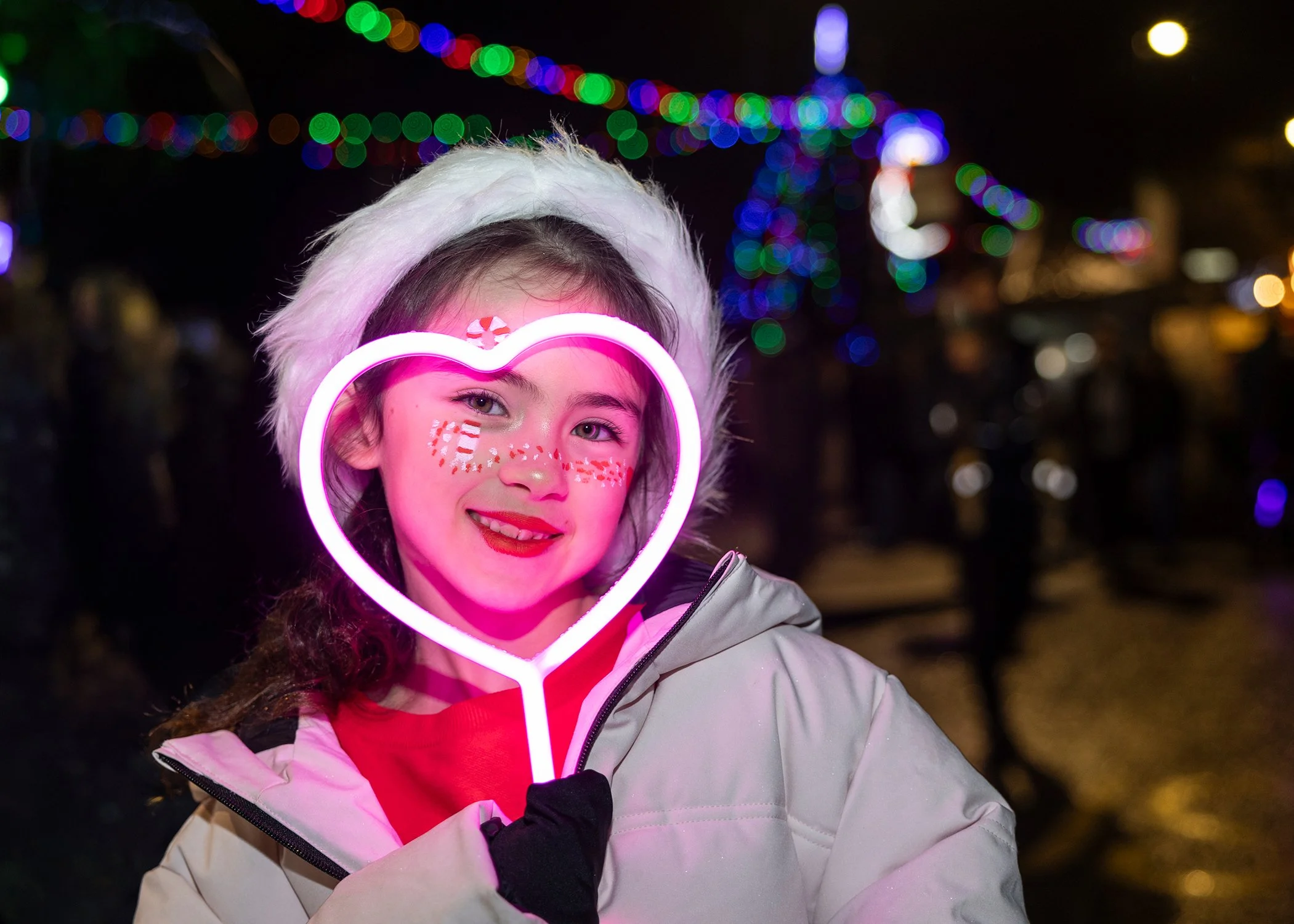
Lots of cities, towns and villages switch their Christmas lights on in November, and it's one of the loveliest nights of the year to have a camera with you. A brass band or a choir, a countdown, the big moment, then hot chestnuts, sweet and mulled something and a queue for Father Christmas. While it’s tempting to be distracted by the lights, the stories are elsewhere: in the faces when the lights come on, and in all the people who made the evening happen (and rarely get photographed).
Turn your back on the lights at the countdown. "Ten, nine, eight..." and the crowd is a sea of faces lit by the street below them, then suddenly by the lights above. Children on shoulders with their mouths open, grandparents with their phones up, someone mouthing the numbers. That's the moment.
Find the unseen people. Arrive early and you'll find them: the volunteers who put the lights up, the marshals in hi-vis, the stall holder setting out the mince pies, the first aider with a flask, the band tuning up in a doorway. Have a chat, then ask if you can take a picture. People photographed doing the thing they're proud of give you the best expressions of the night.
Use the lights as a background. With a wide aperture, the lights behind someone melt into soft circles of colour. Put a face in front of the Christmas tree with plenty of space behind and the tree does the decorating for you (on a phone, portrait mode does the same job, though I prefer to add portrait mode after).
Look for the small emotions. A gloved hand holding a smaller gloved hand, a singer mid-note, steam rising off a cup in someone's cold fingers, a volunteer finally sitting down. The big moment is shared; these ones feel private.
Inspiration of the Month
Andy Goldsworthy Sculptor and land artist · Working with time
If there’s one artist I think of most in November its Andy Goldsworthy. Born in Cheshire in 1956, he grew up on the Harrogate side of Leeds, worked on farms from the age of thirteen and studied at Bradford College of Art before settling in Dumfriesshire. He makes his work outdoors from whatever is to hand, leaves, ice, snow, stones, thorns and twigs, often with nothing but his bare hands. Most of it lasts hours or days before a gust, a tide or a thaw takes it back, so the photograph is how it survives. "Each work grows, stays, decays," he has said, and "photography is my way of talking, writing and thinking about my art."
Explore Andy's work at nationalgalleries.org
Photo Walk of the Month: Wildlife Photography for Beginners
Sharper photos, improved fieldcraft, better compositions and more…
Settings first, then the field. On the 13th November we'll start indoors in Burley in Wharfedale, getting to grips with camera settings, autofocus and composition, then head out locally to put it all into practice.
