
One of the great and mysterious quirks of our Victorian terrace house, particularly in the hot summer months, is that it often feels cooler indoors than it is outside. It’s wonderful in the middle of a heatwave, and while we’ve been here nearly 15 years, every year when summer gives way to autumn, it still catches me by surprise when I add a layer to go outside only to find it’s warmer than it is indoors and that my additional layer is unnecessary.
For those tuned into the seasonal shifts, October is that confusing month where warm and cool days are unpredictable and slightly disorientating. However, it’s this magical recipe that produces some of the most photogenic seasons of the year.
Everything on the Move: Migration Beyond the Birds
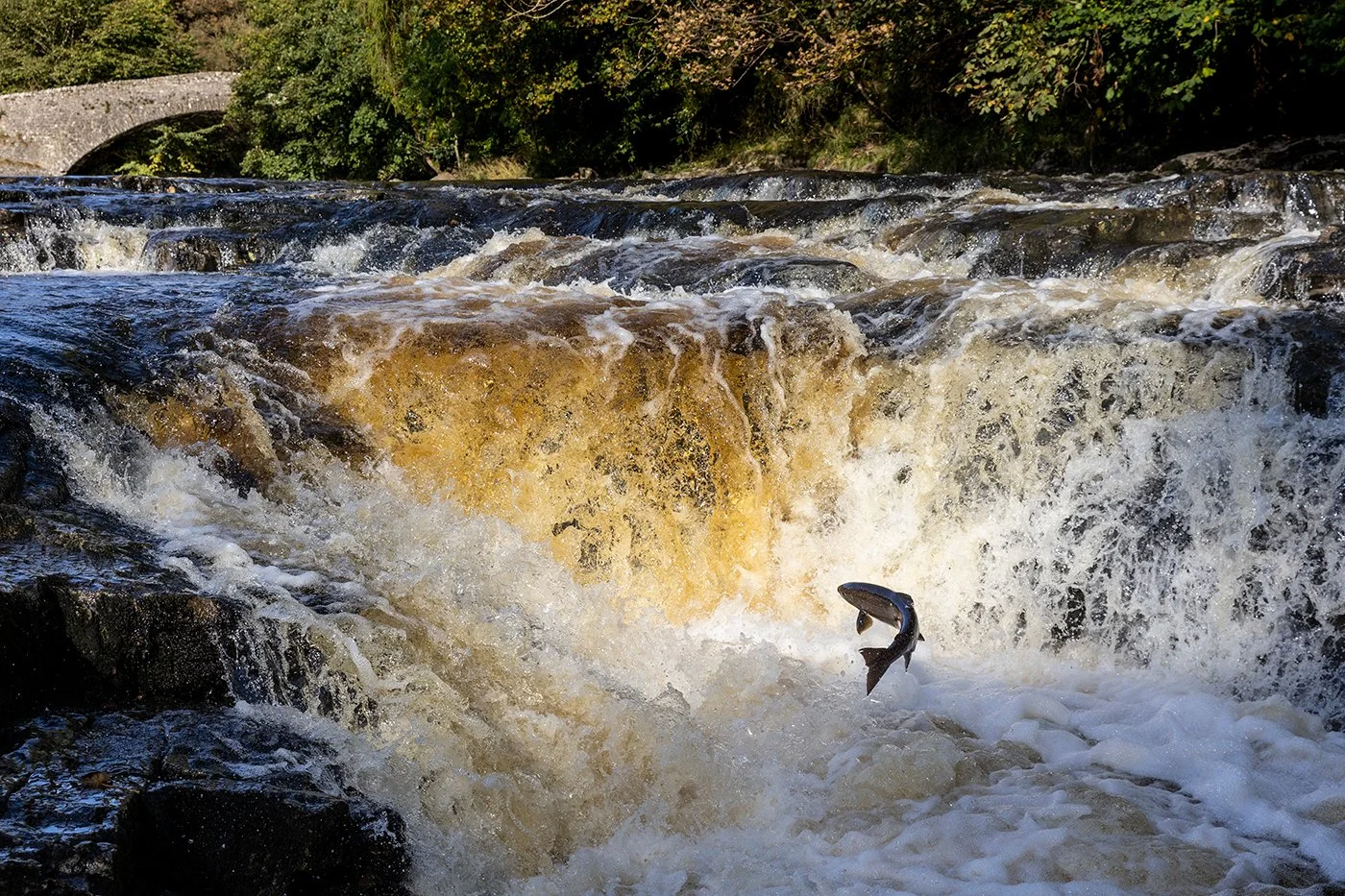
1/1000 f10 ISO 800
October is the busy month for wildlife passing through, and not all of them have feathers. Redwings and fieldfares arrive from Scandinavia and beyond, and on a still October night you can stand in your own garden and hear them going over, a thin "tseep" from somewhere above the streetlights. Pink-footed geese come south in long wavering V shapes, calling the whole way is one of the most evocative sounds of autumn. And on the coast almost anything can turn up particularly after a storm.
If you can pull your gaze away from the skies, there is an autumnal spectacle unlike anything else. Salmon have been making their way back from the seas and upstream towards their breeding grounds. In October, after a rainy night or day, you might be lucky enough to catch a glimpse of leaping Salmon. Traditionally Scotland has always been the best place to witness the yearly event in the UK, but with more awareness and conservation efforts, maybe we’ll see more Salmon in more unexpected places. My personal favourite place to go is Stainforth in the Yorkshire Dales but I’m also just as excited to go and visit some of the recently installed fish ladders, like the one in Saltaire.
While the Samon and trout make there way inland adult silver eels of around ten to twenty years old start their journey to the Sargasso Sea, this remains one of the most extraordinary and enigmatic migrations in the natural world.
Tips for Photographing Leaping Salmon
Go a day or two after heavy rain, when the river is up but dropping
For salmon, anticipation and patience is the key. A fish is in the air for less than a second. So frame the lip of the waterfall, pre-focus around the middle of it and leave it there, then hold the shutter down in burst mode whenever the water bulges. Expect a lot of empty frames and with luck one good one (use a remote and watch above the camera). Some mirrorless cameras offer a pre-capture/shoot mode which is built for this kind of photography
On a phone, I’d opt for a Slow Motion Video, which is equally impressive and a litt;e easier. Film maybe 10-20 seconds at a time and delete, edit into just one short powerful clip!
Hidden Corners: Fungi and Painting with Light
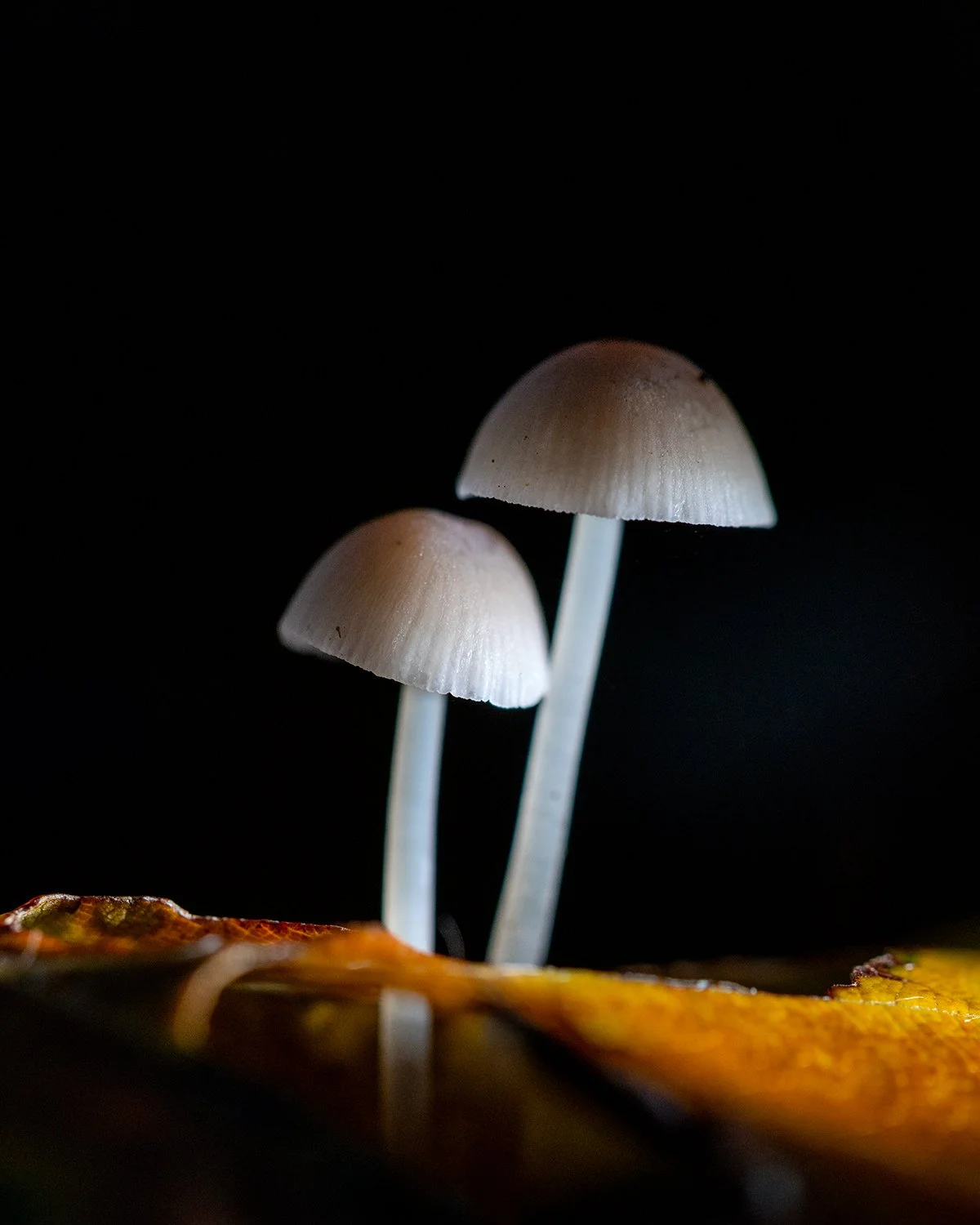
Fungi in a dark corner of the woods lit by an LED light
The woods are full of fungi this month and while it’s a painfully obvious choice it is impossible not to turn your lens on the hidden and marvellous world of fungi!
One of the biggest challenges is finding pristine specimens before they inadvertently get damaged or knocked over by walkers, dogs and wildlife.
Head out regularly and if possible early. Look in the hidden dark corners where they might be in better condition.
Whether you’re using a camera phone or the latest mirrorless camera, the problem you’ll often find with fungi is light and the lack of it. So take your own light. A small torch, a phone torch, I like to use LED panels, this can not only elevate your toadstool photos but is also fun to play around with too!
Fungi Photography Tips
Bring a gardening knee matt and get low. Getting low is almost essential for interesting photos, I’m always keen to reveal the gills of fungi. Getting low (or getting back up!) is an issue, look for fungus growing on trees or an elevated environment like a bank or roadside park or garden where ground level is conveniently found at head height
Experiment with light positions, particularly from the side or from behind
Steady the camera. Those low light levels will mean slow shutter speeds, even with a camera phone so using a tripod or resting on the ground or a beanbag will help stop camera shake, use the self-timer so you're not touching (and wobbling the camera) when it fires.
Tidy the set. Pay attention to the detail remove twigs, leaves and litter that may distract from your subject (I use tweezers)
Wash your hands!
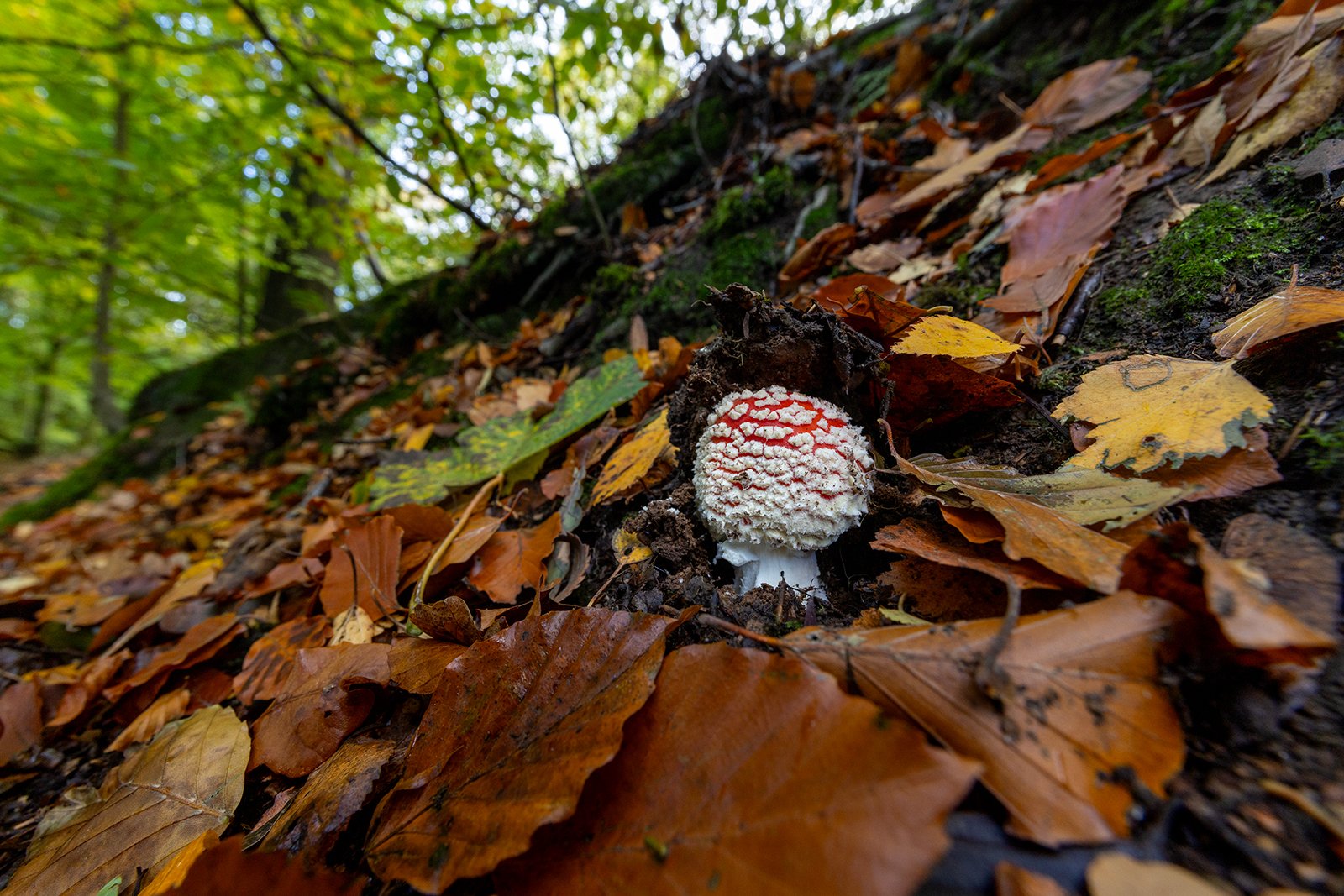
1/20 sec f9 ISO 400
Woolly Hats and Short Shorts: Cold x Warm
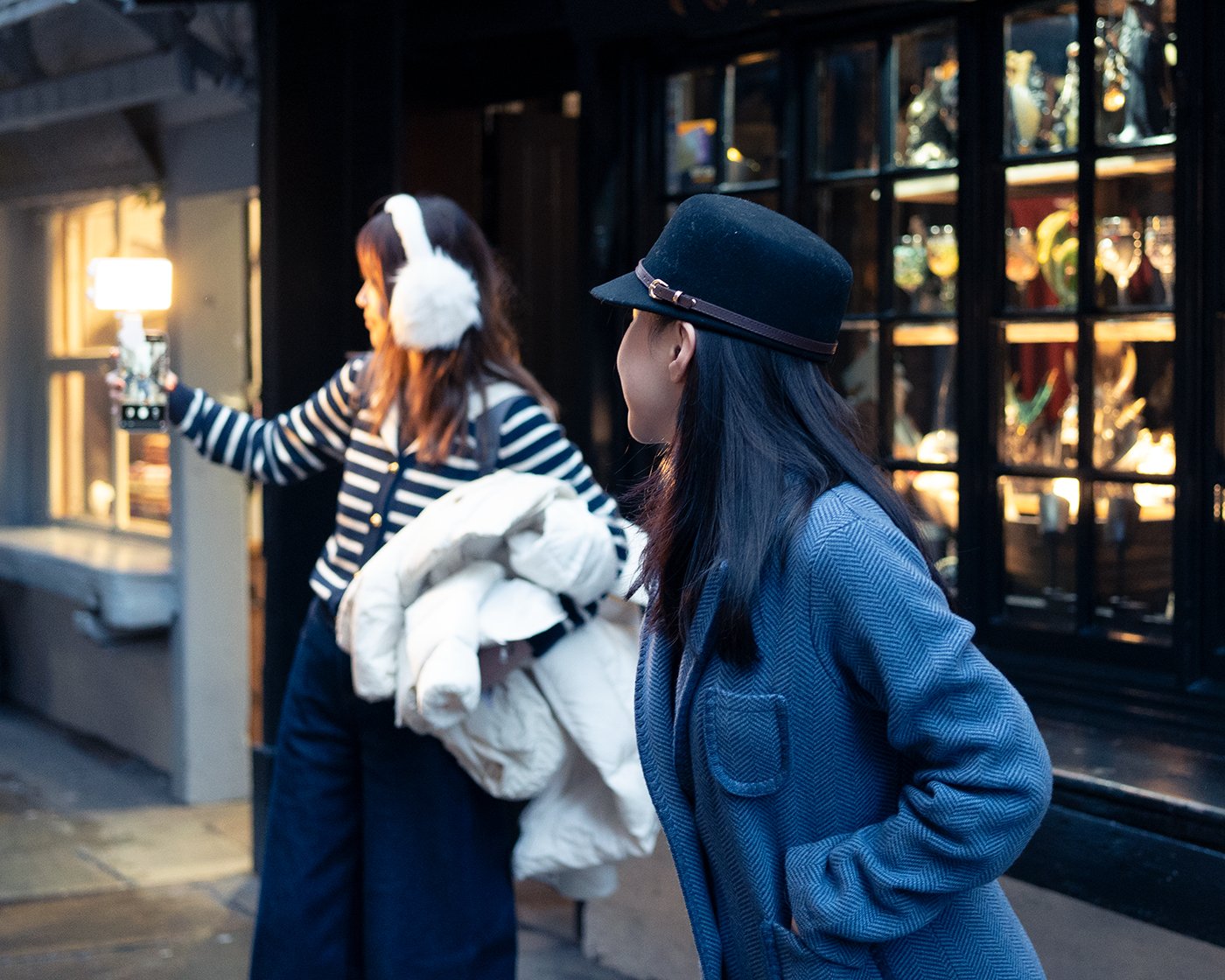
Coat on or coat off? Warm highlight and cool shadows playing together
As already discussed, October can be a tricky month to predict, where warm air can giveaway to chilly winds in minutes several times a day. Somebody at the bus stop in a bobble hat and shorts is not an unexpected sight. Warm orange light spilling out of a café window into the cool, blue hues of an autumn twilight. Steam off a cup of tea in cold air.
Colour temperature is something that can unintentionally ruin a photo but when thought about carefully, can be a master stroke. You’ll see it referenced regularly in films, advertising and fashion, warm hues contrasted with cool tones. As October cools, look for ways to contrast the idea of warm and cold together.
Go out at blue hour, the twenty minutes or so after sunset when the sky has gone deep blue but the street lights are on. Any lit window, street lamp or pub doorway against that sky is your warm against cool.
Shoot in RAW to help you get the most of colour and tone in the edit.
Celebrate the Wet: Rain Is Part of the Story
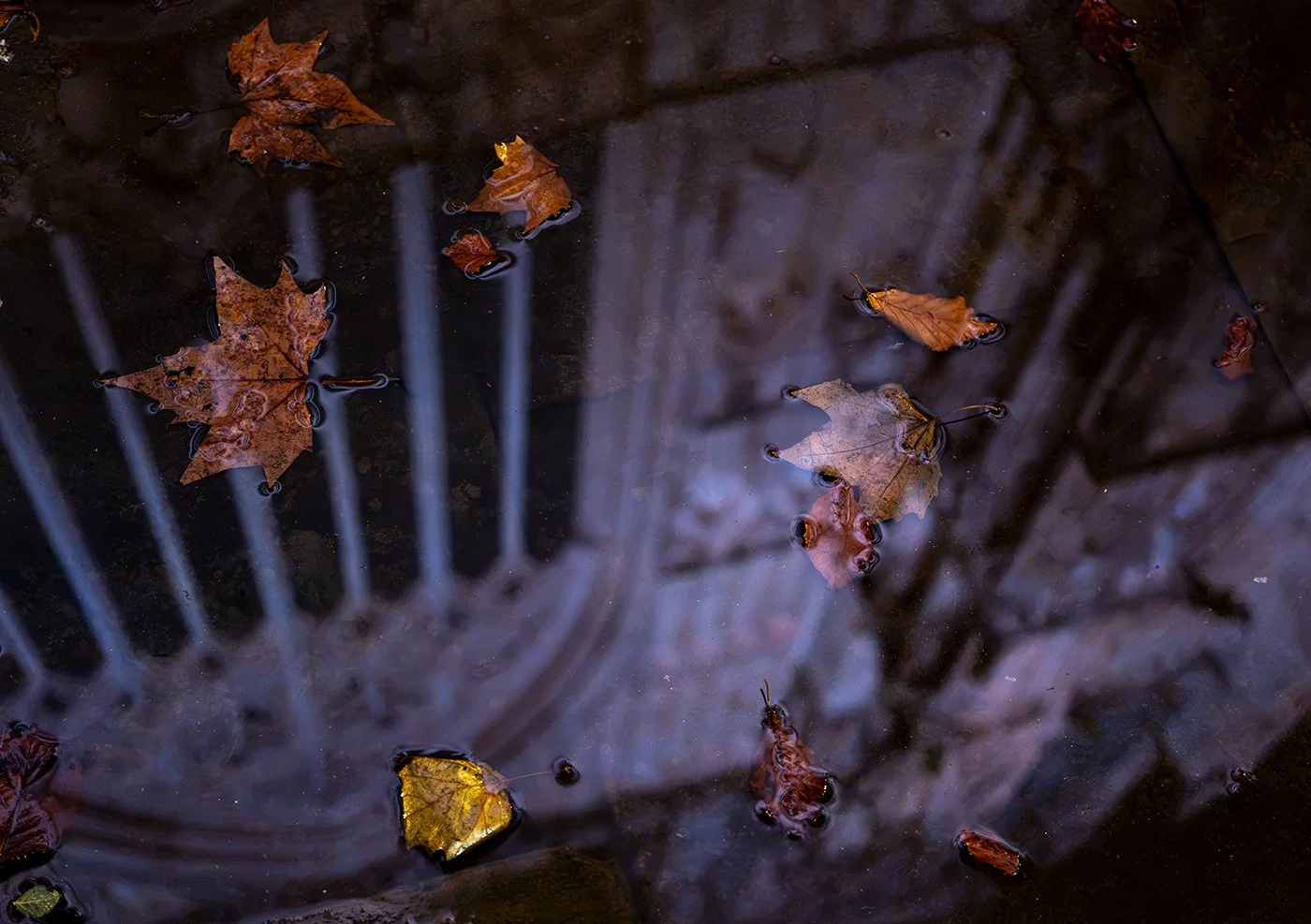
It's been a dry summer. The rivers dropped, the grass went brown and the becks were reduced to a trickle. October's rain isn't the weather spoiling your walk, it's the season doing its job: filling the reservoirs (hopefully), lifting the rivers for the salmon to run, and bringing on every mushroom season. So this month, when it rains, go out. Most people put the camera away in the wet, which means the pictures nobody else has are waiting there for you.
Make the rain visible. Falling rain vanishes against a grey sky and shows up against a dark one, so put a dark wall, a wood or a hillside behind it and, if you can, some light coming from behind or the side. A street lamp at night is ideal.
Choose a shutter speed on purpose. Around 1/125 turns rain into short streaks that look like rain; 1/1000 freezes it into beads; a second or more makes it disappear into mist
Shoot the reflections. Every puddle is a second picture of the thing above it. Get the camera down to the level of the water, in a doorway or under a bridge if you'd rather stay dry, and find the moment somebody walks across it.
Use windows. Raindrops on a bus window, a café window or your own kitchen window, with lights out of focus behind them, are one of the oldest tricks in photography and still one of the best. Focus on the drops and let the world behind them melt.
Look after the kit without fussing. A lens hood keeps drops off the front, a microfibre cloth in your pocket wipes them off, and a plastic bag with a hole for the lens is all the rain cover most of us need
Wait for the end of it. The half hour after a shower, when the sun comes through onto wet stone and wet leaves, is the richest colour October has. Everything is darker, shinier and more saturated, and the sky is likely to be doing something dramatic behind it.
Inspiration of the Month
Saul Leiter Street photographer · Pioneer of colour
If October is about warm against cool and rain against glass, Saul Leiter is the photographer who spent sixty years on it. He moved to New York in 1946 meaning to be a painter, and instead walked the same few blocks around his flat on East 10th Street for the rest of his life, photographing them in colour at a time when street photographers thought colour was for adverts. Rain, fogged windows, red umbrellas, the orange glow of a diner seen through a wet bus window, all of it fragmented and half hidden behind something. He left around forty thousand colour slides, and the world largely ignored them until a book of his early colour work came out in 2006, when he was 83. He said a window covered in raindrops interested him more than a photograph of a famous person, and his pictures prove he meant it.
I was lucky enough to see Leiter’s retrospective at the Photographers’ Gallery, London and have several publications on him, but the thing that initially drew me to him was the 2014 film ‘In No Great Hurry’ which I’d thoroughly recommend watching.
Explore Saul's work at saulleiterfoundation.org
Photo Walk of the Month: Fungi Photo Foray, Friday 9 October

On Friday 9 October we'll spend the day exploring and photographing fungi. From miniature fungus growing out of a rotten log to fly agarics in the landscape we’ll explore both common and secret approaches to getting the best fungi photographs.
