
September Photography Tips: Less Is More?
September is the month the landscape starts taking things away. Fewer flowers, shorter days, less warm mornings and the first mist lying in the valleys. It sounds like a loss, yet for the camera it’s the opposite.
Less flora means higher concentrations of butterflies and insects on the diminishing nectar resources. Less daylight hours mean darker skies at a more sensible hour. Cooler evenings mean more mist and fog opportunities for those delightfully simple landscapes!
So this month's theme is taking things out rather than putting them in, and it's a lovely time of year to try it!
The Last of the Nectar: Crowded Butterflies and Bees
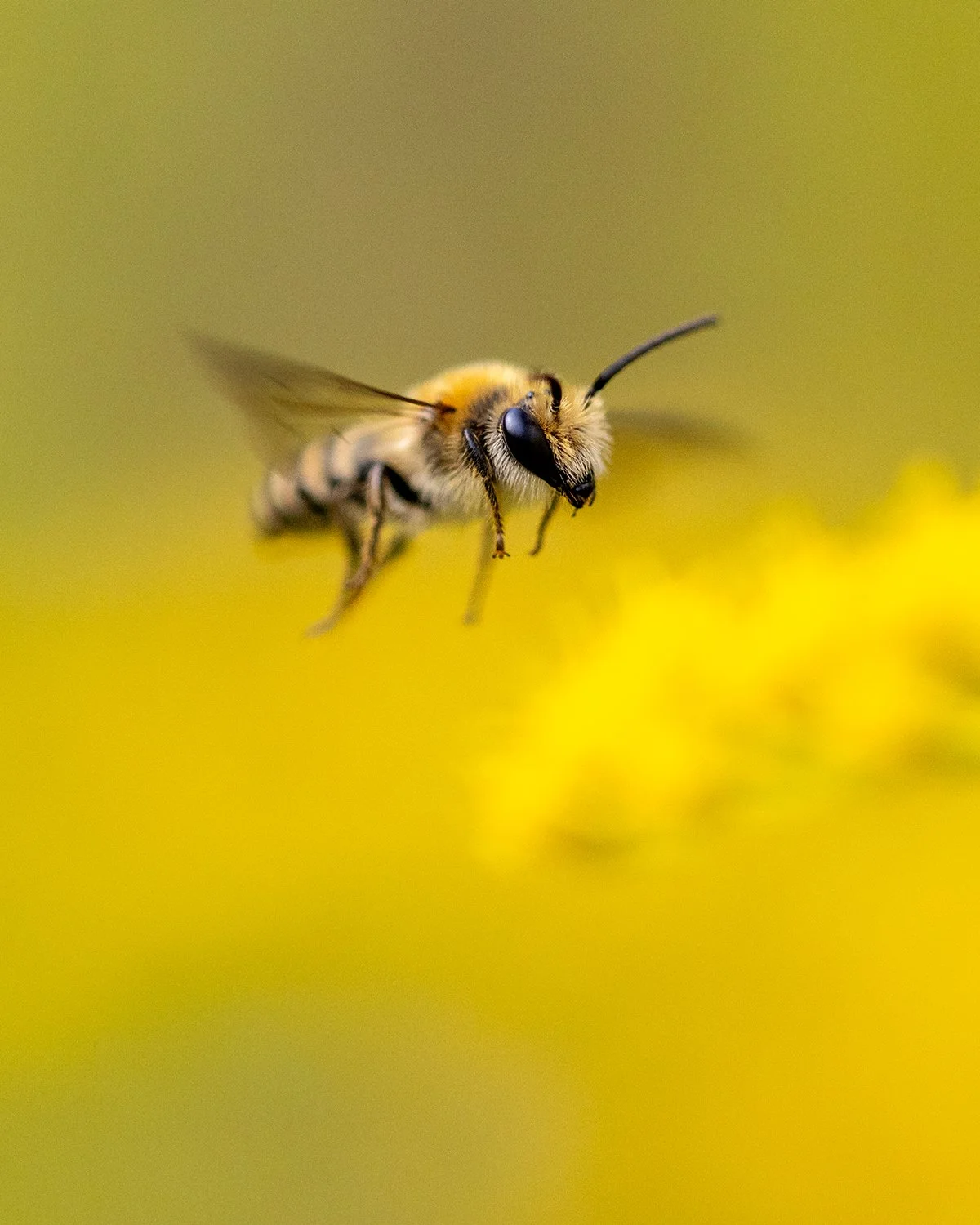
Ivy Bee (male) - A new species to the UK since 2001 emerges in September
August's butterflies are still here and as hungry for nectar as ever! With little left in bloom, red admirals, small tortoiseshells, painted ladies, peacocks pile onto whatever is still flowering in gardens and parks: buddleia, sedum, daisies, and above all ivy, which comes into flower in September and buzzes like a shopping centre on black friday!
While exploring, look out for the ivy bee. It’s a new species that only arrived in Britain in 2001, on the Dorset coast, and it has been spreading north every year since. You can find out more on my Ivy Bee Blog post here.
This month's photo tip is the background. When you’re so intent on your subject it can be easy to overlook (or underlook?) the background
Look past the subject before you press the shutter. A busy background of twigs and foliage, a brightly coloured bin or powerlines dissecting the wings. Pay attention to things that may distract from your intended subject. Sometimes the smallest of adjustments can make dramatic improvements.
Get closer. The closer you’re able to get, the softer the background will become. If you use a zoom lens that will have the added effect of narrowing your perspective which can also help minimise complex backgrounds.
Get the background far away. The further the background is from your subject the more it will soften. Look for angles that increase the distance between subject and backdrop.
Time Travelling: Living Museums and the Moment
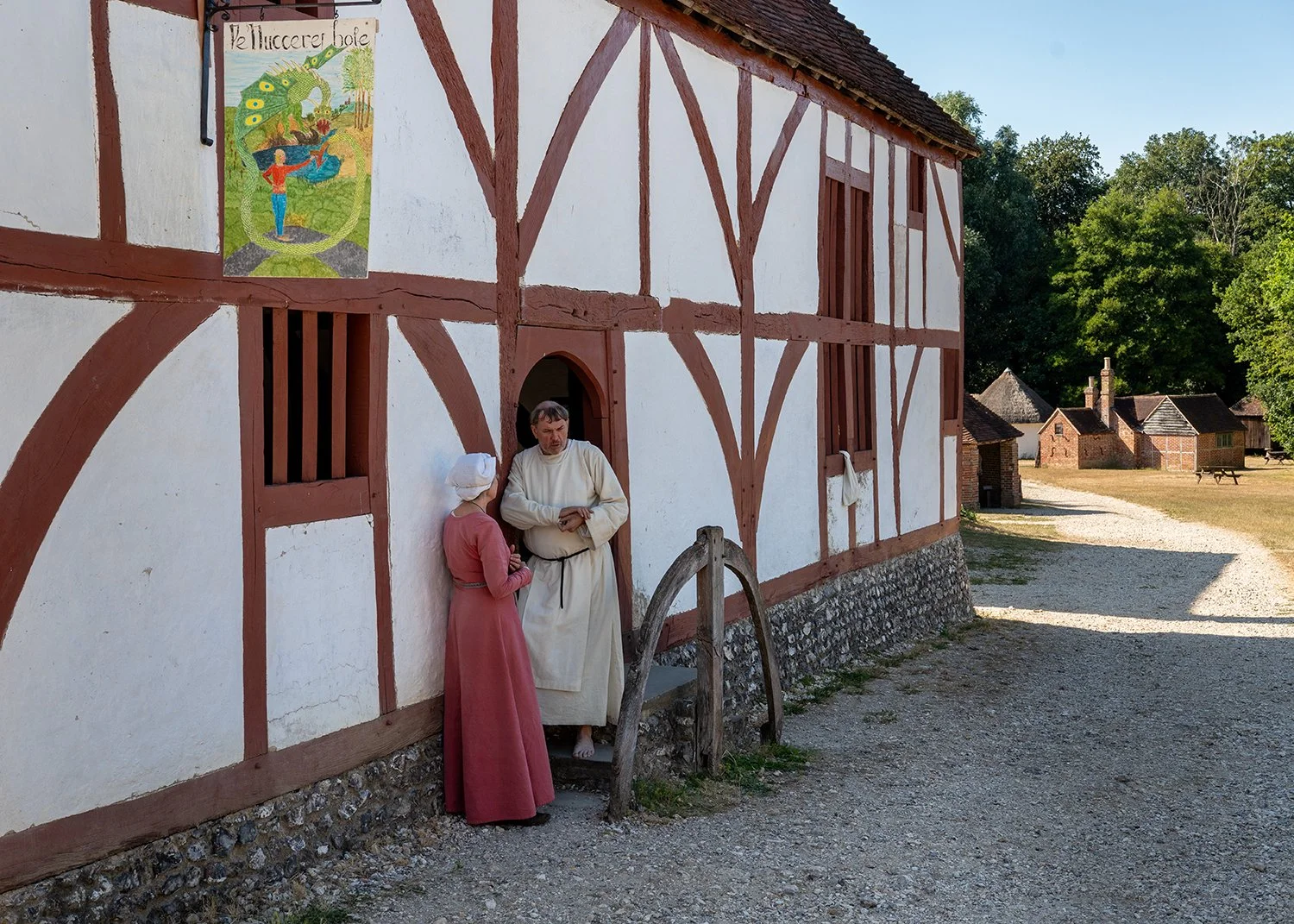
A candid moment at Weald & Downfield Museum
Whether you’re a nervous beginner or a confident pro at photographing people, Living Museums are some of the most exciting places to explore street photography in.
Beamish in County Durham, the Black Country Living Museum near Dudley, Blists Hill in Shropshire, Weald & Downland Living Museum in Chichester and many more across the country. All have houses, streets and even villages set in another century, staffed by people in costume who are used to being photographed. Whether it’s architecture, machinery or people in medieval attire there’s a lot to turn your lens to in these extraordinary locations.
It’s a perfect place to explore street and travel photography and finesse capturing “moments”.
Use it as an opportunity to make mistakes, learn and perfect approaches. Then take the habit home.
Darker Skies at a Decent Hour: Night Sky Photography in September
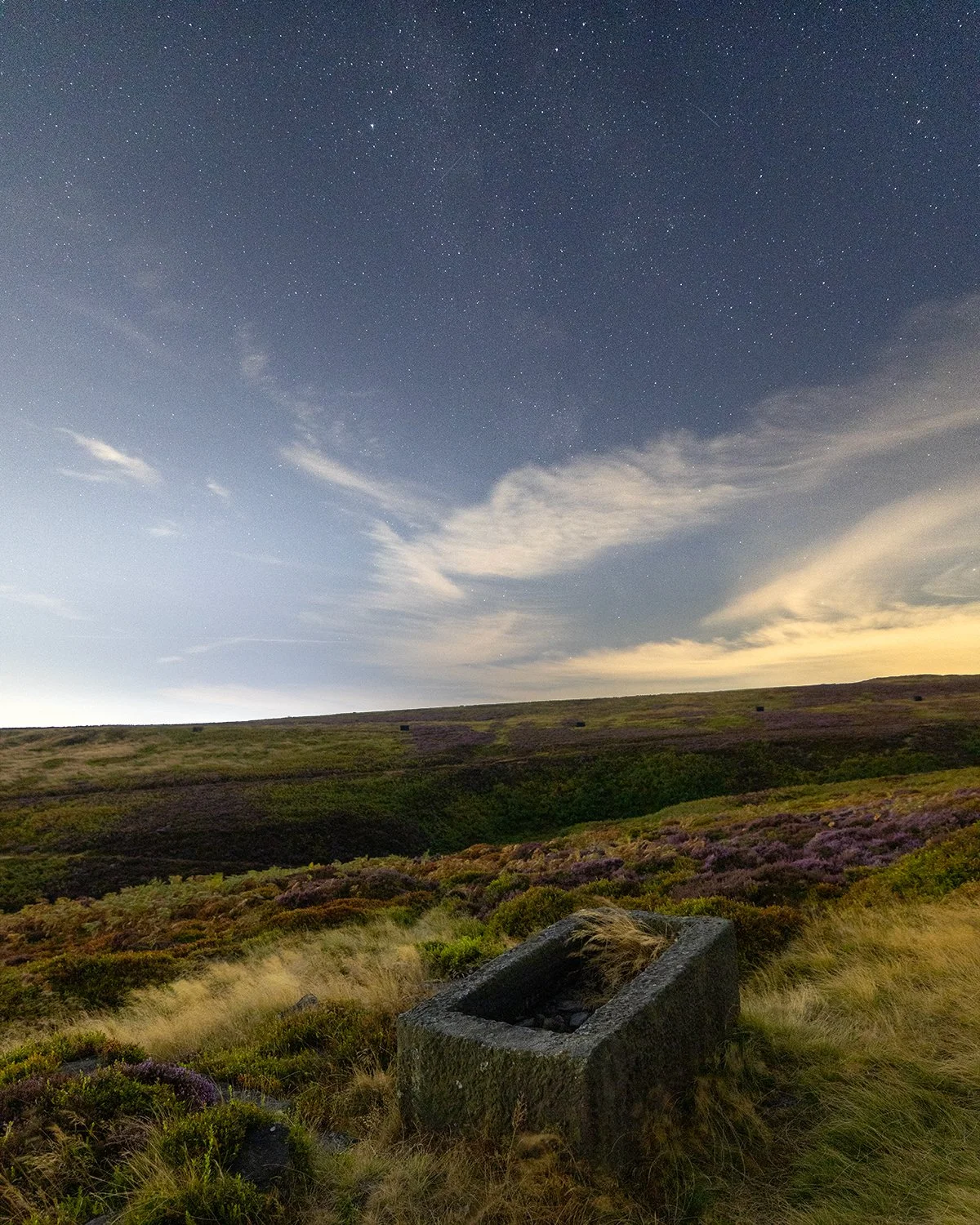
10 second exposure, f/2.8 ISO 3200 (sky & landscape exposures blended together in Photoshop)
For most of the summer, properly dark skies meant staying up past midnight. In September the night comes back to meet you. By the end of the month the sun is setting before seven and it's fully dark well before ten, the nights are still mild enough that you'll be standing about in a fleece rather than everything you own, and the Milky Way is still up in the south and south west in the early evening before it slips away. It's the best balance of dark and comfortable the whole year offers.
Two dates to plan around. The new moon falls on Friday 11th September, so the week either side of it is your window for the faintest stuff, stars and Milky Way included. The Harvest Moon rises on Saturday 26th September, the full moon nearest the autumn equinox, and it comes up in the east just as the sun goes down in the west, which is the one evening a month you can photograph a big low moon over the landscape with colour still in the sky.
Misty Mornings: Keeping things Simple
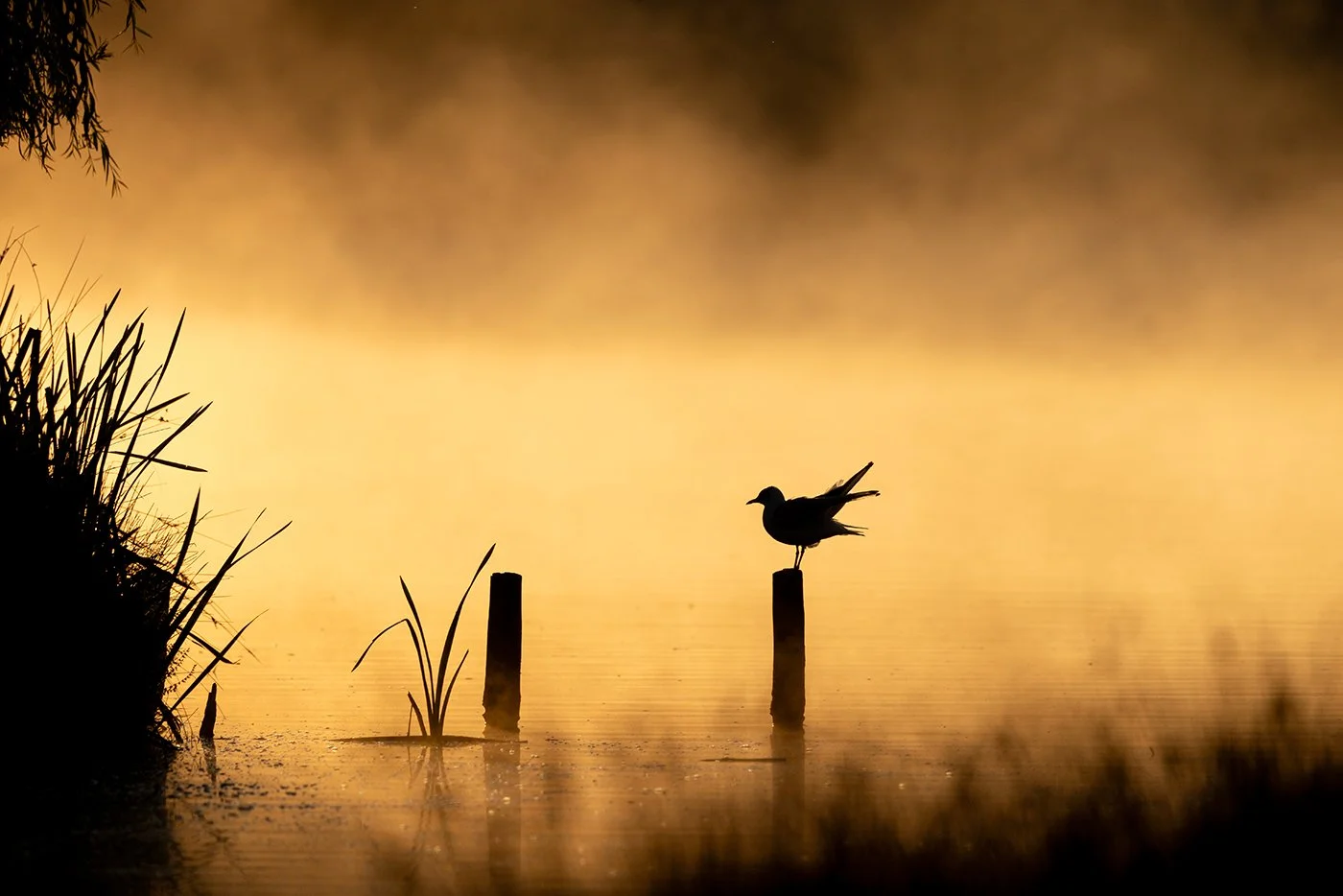
Mist over a local pond softens an otherwise busy backdrop
The first still, clear nights of September bring the first mist. From valleys filled with “the devil’s broth” to fields and parks with an eerily still, knee high cloud. The key to predicting mist and fog is calm nights with a high humidity along with an air temperature and dew point within 1°C of each other. So check the forecast the night before and set the alarm and enjoy a magical phenomenon unlikely to have been enjoyed since April.
These conditions offer a wonderful opportunity to explore minimalist compositions, so don’t ruin it by including too much! Look for arrangements that only include one or two features. Celebrate negative space, don’t be afraid to drown your subject with white (or grey) space.
Inspiration of the Month
David FokosFine art landscape photographer · Long exposure minimalist
When it comes to minimalist landscapes, David Fokos is a self-confessed obsessive, who combines his scientific background with a long term interest in Japanese aesthetic traditions.
Reducing the landscape to the barest minimum to make it stronger. His breakthrough was a forty-five second exposure in which moving water turned to something like mist, and he realised he'd finally made a picture of how a place felt rather than what it looked like. Long exposures with an 8x10 view camera made in 1929 strips out the waves, the gulls, the people, everything temporary, and leaves the horizon, the water and a single pier or rock. He talks about the results being emotionally accurate even when they're visually impossible, and he'll spend a hundred hours on one image to get there.
His projects ‘Earth’ and ‘Celestial’ I find particularly inspiring.
Explore David's work at davidfokos.net
Photo Walk of the Month: Norber Erratics
Boulders that shouldn't be there. On the 26th of September we'll walk up from Clapham to a landscape unlike anywhere else. Hundreds of dark grey boulders sit scattered across pale limestone, carried there by a glacier and left behind when the ice went. It's the perfect place for this month's theme: one rock, one shadow, one sky.
