
August Photography Tips: Start Wearing Purple
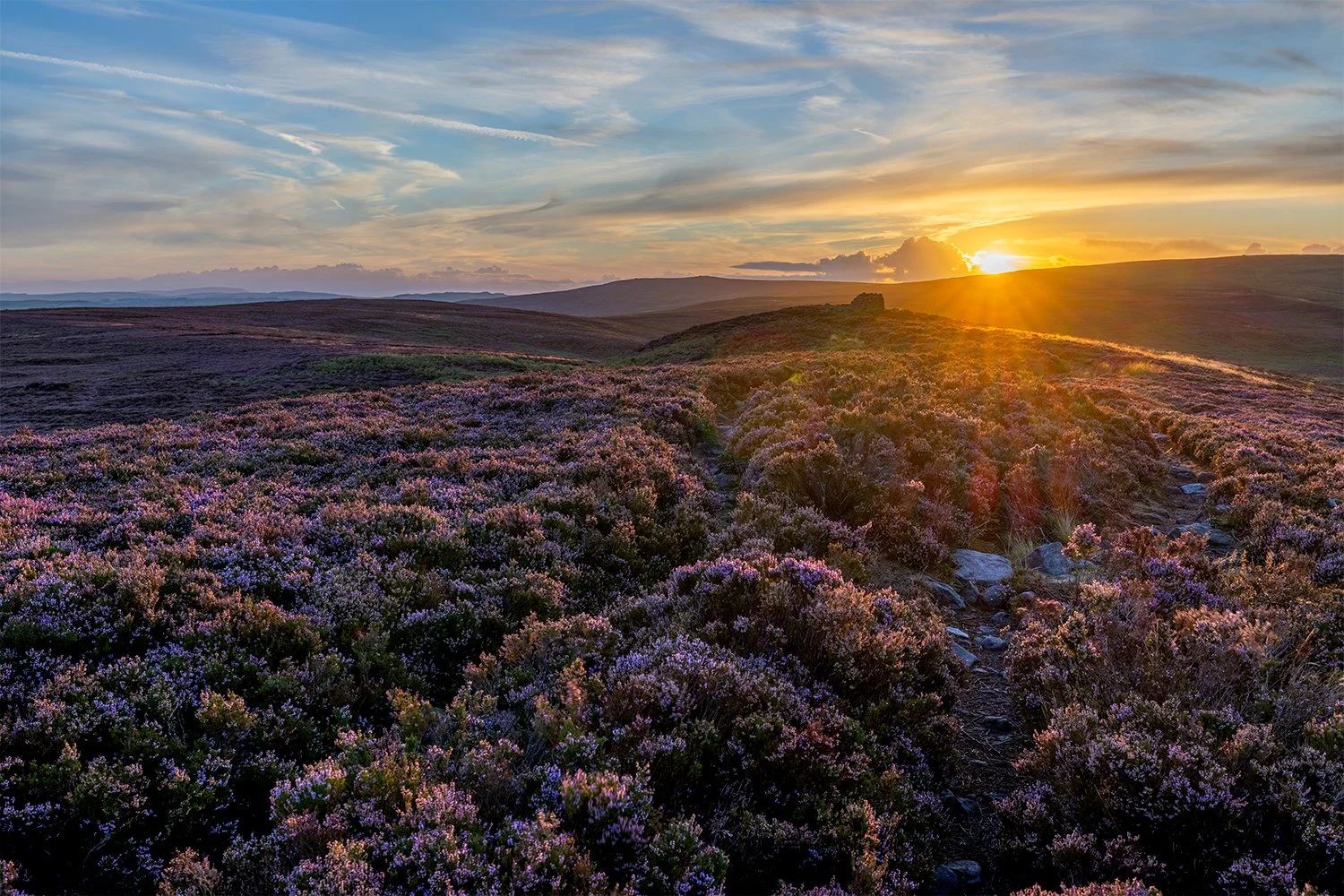
1/250 f/9 ISO 100 (HDR image using a tripod and blending different exposures)
There's a catchy Gogol Bordello song called Start Wearing Purple, and every August it lodges itself in my head, refusing to leave. The catalyst for the songs yearly resurgence inside my brain is the sudden appearance of purple on the surrounding hills and moors. And for a few weeks a race to capture this internationally rare spectacle at its “best” is on!
No surprises then for what one of this month’s photographic ideas to explore is, but read on for tips on capturing stunning photos of heather, solar eclipses and more in August’s Walking Photography inspiration post…
Start Wearing Purple: Heather at its Peak
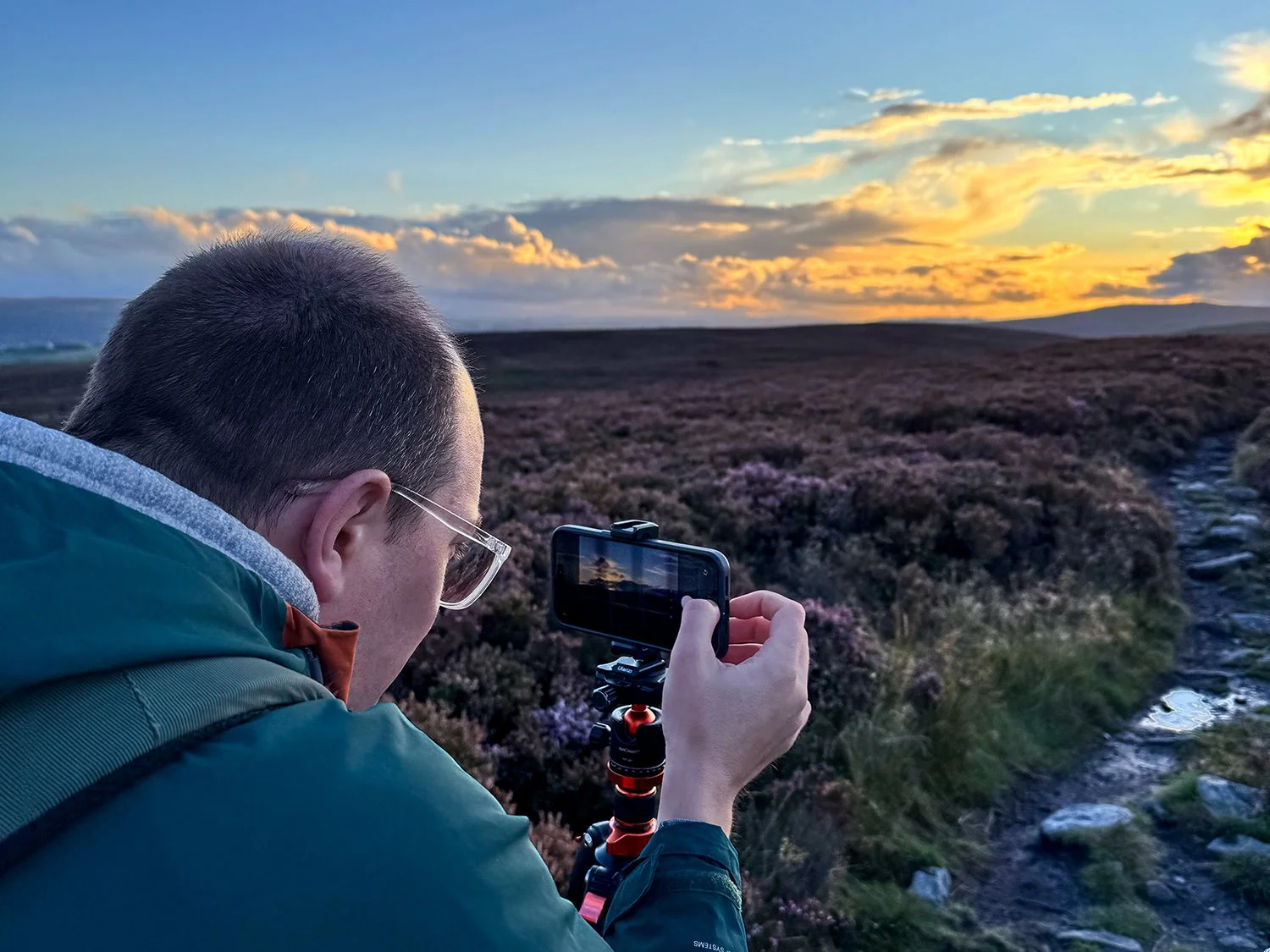
Photo from iPhone
From the Dorset heaths to the Moorland of the Cairngorms, you may be a good deal closer to a patch of purple than you think. Britain and Ireland hold more heather moorland than anywhere else on earth, and the North York Moors National Park puts the scarcity nicely: there is probably less heather moorland in the world than there is tropical rainforest.
But what’s the difference between heathland and moorland? Most notably it’s the altitude. Moorland is typically an “upland” habitat exposed to wetter, colder and windier conditions. While heathland often occurs below 300m in warmer conditions. Both habitats are the result of human activity and management.
The two key heather species are ling and bell heather. Bell heather is the darker purple (bell shaped!) flower that tends to flower earlier however there is usually a crossover with ling which is a paler pink and was once used to make brooms.
From dartford warblers to red grouse, heather offers refuge (and food) to a variety of avian life. Macro life here is in even greater abundance, from innumerable species of bees and wasps to exciting predators like the tiger beetle, once you start exploring the minute amongst the heather time becomes a very vague concept!
Of course it’s the sweeping carpets of of pink and purple that provide that instantaneous “wow” factor. But capturing that sense of awe is easier said than done. One of the key considerations in such scenarios is the use of Depth of Field.
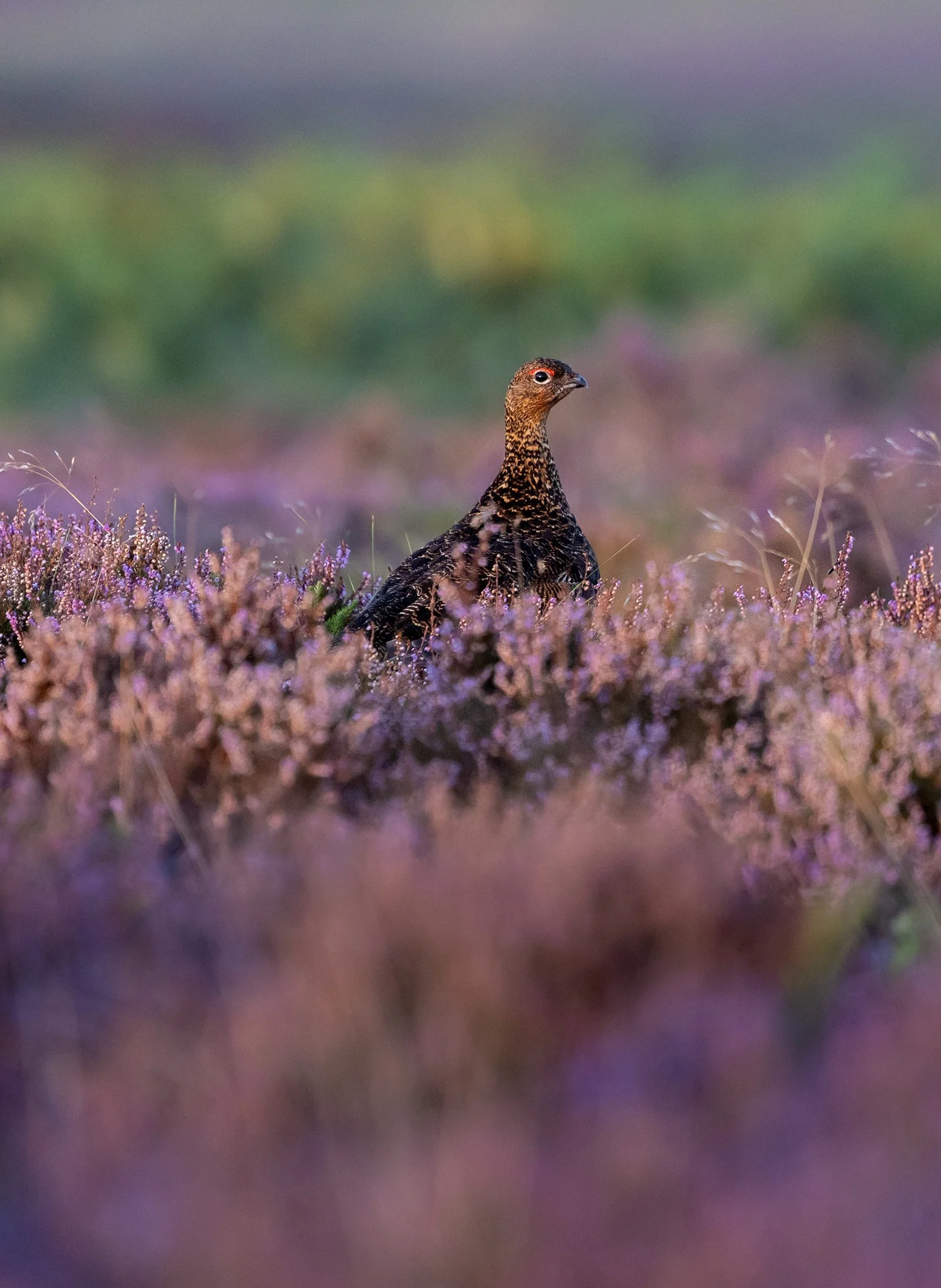
1/2000 f/3.2 ISO 1600
Photographing Heather and Depth of Field (DoF)
For anyone unsure, DoF is a term used to describe an area of focus. And while it might sound like technical jargon for “fancy” cameras, it is a very creative tool that can be utilised by all cameras including camera phones.
Large Depth of Field: I think the instinct for heather scenes is to go for a large DoF to ensure as much of the photos is as sharp as possible. You can aid this by focussing around a third into the scene (use your finger on a camera phone). For cameras that offer an aperture range, you can double down on this by using a f/8 to f/11 aperture.
Shallow Depth of Field: A creative and less visited approach is to minimise the area of focus with a Shallow DoF. You can do this by focussing on a feature (eg. a rock or tree) closer to the camera and if you can, get some magenta heather as close to your camera as possible (still focussing on feature), the closer the heather is to your camera the more it will blur. Again, cameras with variable apertures can help you accentuate this by using your lowest f number (f2.8 f.4).
There have been 716 wildfires across England and Wales this year by the start of August, and July alone brought 393 of them, the busiest month on record. The fire that started at Tintwistle in the Peak District at the end of June took 606 hectares. The Dove Stone fire has been burning for weeks. Last August the Langdale Moor fire near Fylingdales burned for forty days, took out around eighty per cent of the managed moor there. These habitats are rare and a privilege to encounter, do so with care, consideration and responsibility, so others can continue to as well.
Fetes, Festivals & Bank Holidays: Find the Other Angle
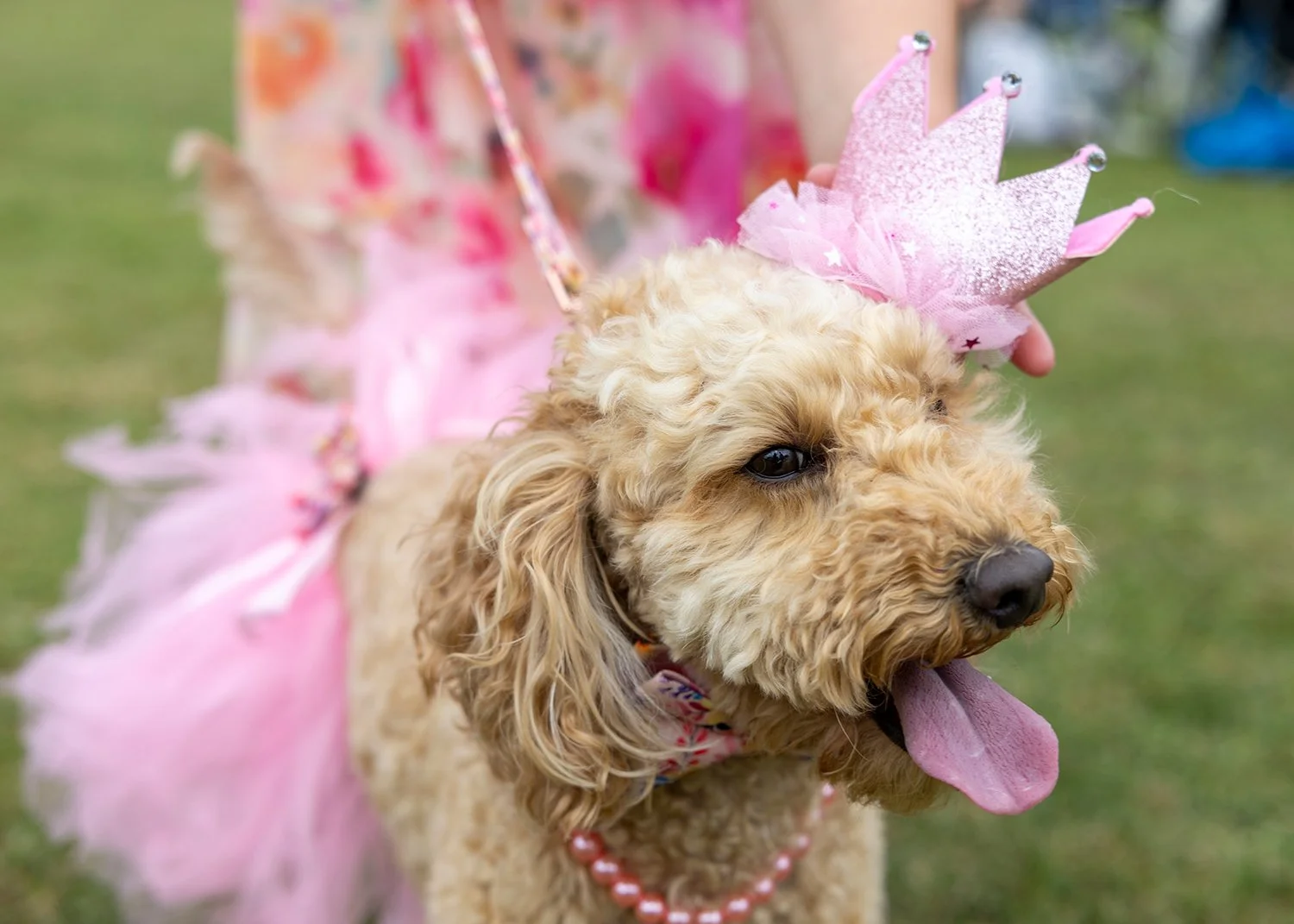
The late bank holiday falls on Monday 31st August, and between now and then many villages and towns will run something with a bunting budget. These are really fun events to photograph but can be easy to take average photos in.
Try doing things differently
Photograph the getting ready. The hour before a fete opens is a hullabaloo of activity. It's where the character is.
Turn round and photograph the audience. Faces watching a dog show can be more interesting than the dog show.
Change your height rather than your lens. Crouch at the edge of the tug of war rope. Look for features that allow you a higher vantage point. Find angles that offer a fresh perspective.
Go in on the details. The light falling on a prize-winning courgette, yarn bomb on a letter box, sometimes inanimate objects tell the tale better than the people around them.
Stay for the pack-down. Look for the stories with the people who care most, the people to stay after the crowds have left.
The Eclipse: This Wednesday (12th), and It Happens Low
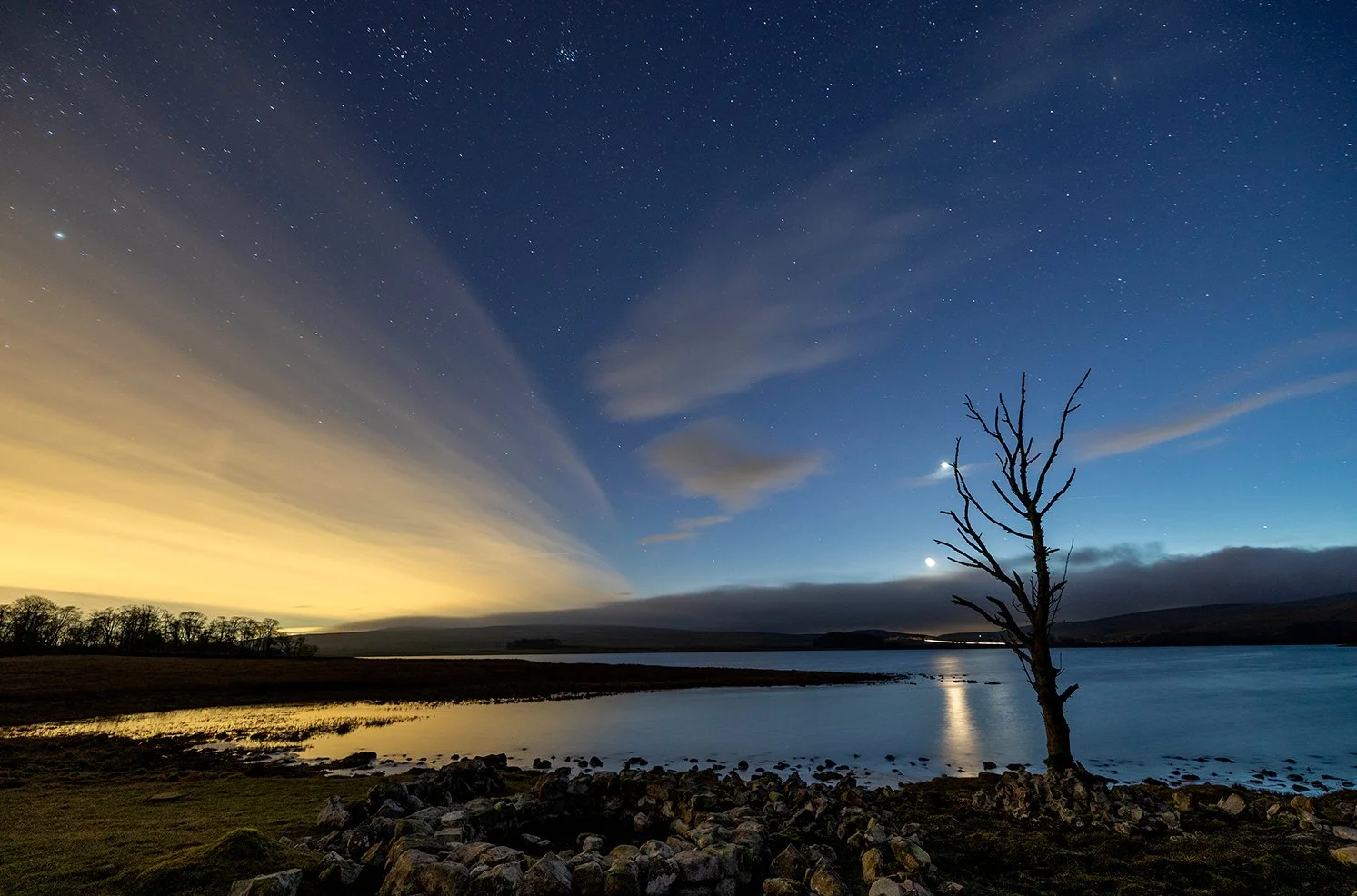
Not an eclipse but an atmospheric photo from last year’s Astro Photography weekender.
This is the big one, and it's on Wednesday 12th August. From here in Yorkshire the moon will cover around ninety per cent of the sun, which is the most we've seen from this part of the country since August 1999. Totality itself runs over Iceland and northern Spain, so we get a very generous partial and a very unusual one.
Rough timings, which shift by a couple of minutes depending where you stand:
Bradford, Leeds and Wharfedale: first contact 18:12, maximum 19:09, all over by 20:03
London: first contact 18:17, maximum 19:13, finished 20:06
Here's what makes it worth planning properly. At maximum the sun will be about twelve degrees above the horizon from Leeds, sitting almost due west. By the time the moon clears the last of it the sun is down to four degrees and about forty minutes from setting. This one gives you a ninety per cent crescent in golden-hour light with actual landscape underneath it, and at 200mm you can hold both in the same frame.
Which means the shot is really worth planning.
You need a clear, open view to the west. A moor edge, a west-facing coast or high ground.
Apps like Photopills can help you plan and visualise the path of the sun from any location and at any time.
When you’ve found your spot Go and stand there this weekend at about seven in the evening and watch where the sun actually goes.
Now the part I'd rather you didn't skim. Ninety per cent covered is still blinding, and a low sun feels deceptively comfortable, which is exactly what makes it dangerous.
Eye protection means eclipse glasses certified to ISO 12312-2. Sunglasses are not eye protection, however dark they are, and looking through binoculars or a lens while wearing eclipse glasses is NOT safe.
A landscape ND filter is not a solar filter. A 10-stop ND will happily let through the infrared that cooks your retina. You need proper solar film, something like Baader AstroSolar, and it goes on the front of the lens.
Never look through an optical viewfinder at the sun. Use a live view or an EVF, and put the lens cap on between shots.
BE AWARE an unfiltered long lens pointed at the sun can damage your sensor
Two more things about that Wednesday. It's also the peak of the Perseids on the night of the 12th into the 13th, and because the moon doing the eclipsing is a new moon, there will be no moonlight at all. It's the best Perseid year in ages. Astronomical darkness here runs from about 23:30 to 02:55, so you can photograph an eclipse at teatime, have your tea, and be back out for meteors. If you'd like to get properly to grips with the night sky afterwards, the multi-day astro workshop at the end of September is where we do that slowly and thoroughly.
What's Different About This August?
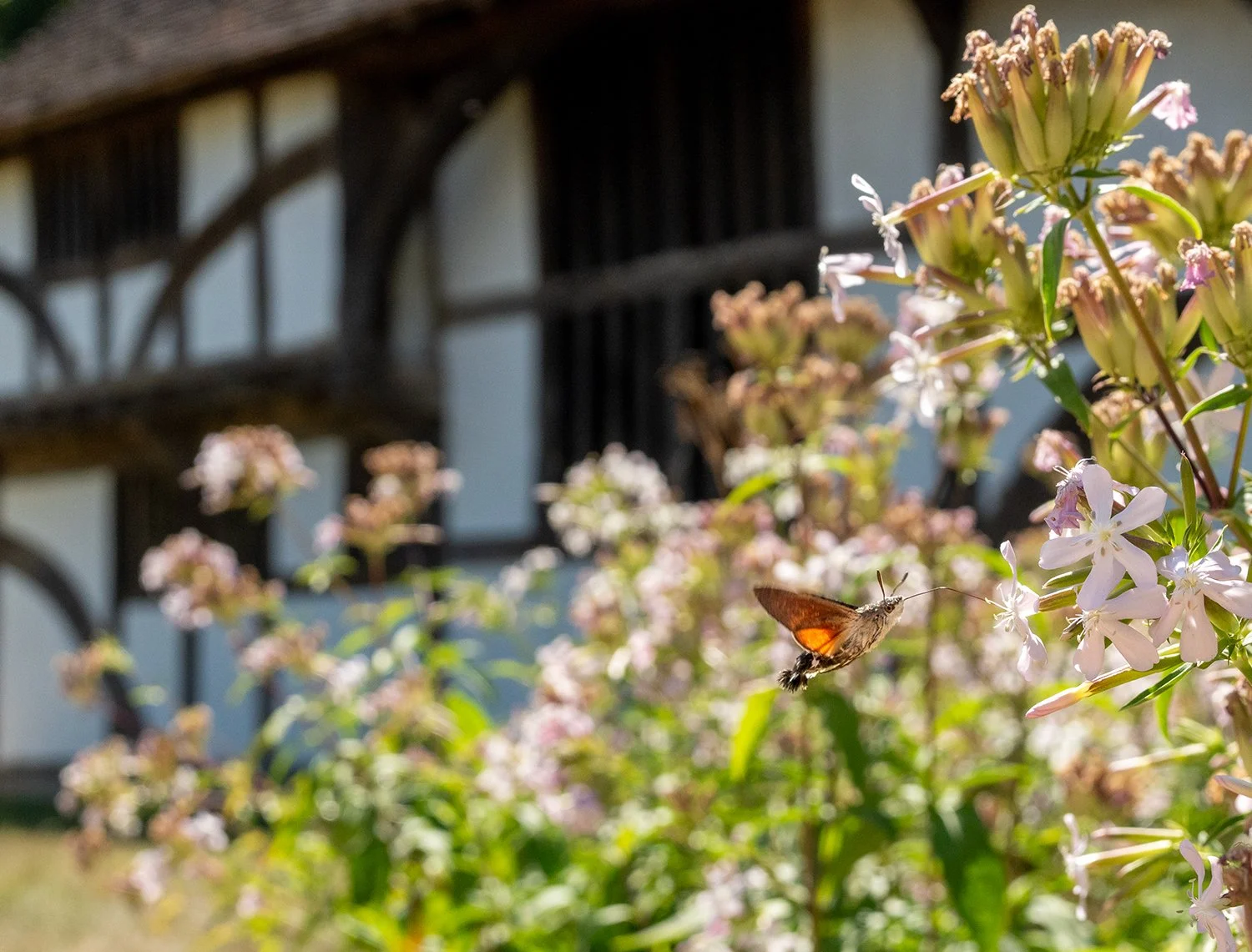
A hummingbird hawk moth summer? Catch them while you can! 1/2000 f/8 ISO 1600
No two Augusts are the same, but only a careful, creative eye will pick up on these nuances.
It's a painted lady year, and a properly good one. 2026 is being called a once-in-a-decade summer for them. A painted lady on flowering ling is a genuinely achievable August photograph and a lovely one. The Big Butterfly Count closes on Sunday 9th, so there's still time to send your fifteen minutes in.
It's also very dry. Drought was declared across half of England at the end of July, we've had the hottest May day and the hottest June day on record, and the landscape shows it. Cracked reservoir margins, brown lawns, a beck you know well running at a trickle, trees turning early. It's not pretty and that's rather the point. In five, ten, one hundred years these could be the most lasting pictures you took.
So for this August ask: what is different about this one?
Photograph the evidence, not the scenery. Water levels, burnt ground, scorched earth.
Same spot, same date, every year. It takes two minutes and it becomes the most valuable thing in your archive.
Have you got summer visitors arriving this month? When will you next see them? Treasure the moments and photograph them.
Inspiration of the Month
Melanie KingArtist and researcher · Sustainable Darkroom
Melanie King is a British artist who works with cyanotype, anthotype and chlorophyll printing, making images with plant material, sunlight and very little else. Her project Scorched Earth came out of driving past Fylingdales in North Yorkshire and finding the moor burnt for miles. Rather than simply document it, she printed the work using processes where the image forms by bleaching plant matter in sunlight. The picture is made by the same thing that did the damage, and like the moor, it will not last.
She has also spent years photographing astronomical subjects, including a large cyanotype exposed by ultraviolet light with the solar physicist Professor Lucie Green. Which makes her, for the month of an eclipse over a burning moorland summer, about as on-theme as it's possible to be.
If you fancy trying it: buy a sheet of cyanotype paper, pick a sprig of heather or bracken on your next walk, lay it on the paper in the sun for fifteen minutes and rinse it in water. You'll have a print made by the moor, on the moor, on the day you were there.
Explore Melanie's work at melaniek.co.uk
Photo Walk of the Month: Ilkley Moor, 16th August

Purple, at close range and at distance. We'll be up on the moor on Sunday 16th August, right in the heather's best fortnight, working through exactly the depth of field ideas above with grouse grumbling somewhere off in the bracken and a very good chance of the moor doing its once-a-year trick. Small group, bring boots you don't mind kneeling in.
